Scaling Modern Aquaculture: The Critical Role of Heavy-Duty Fish Transfer Hoses
Navigating the Depths: The Future of Global Aquaculture & Safe Biomass Transfer
Updated September 9, 2026
Product links mentioned in this blog:(CSS) Heavy Duty Fish Transfer Suction & Delivery Hose
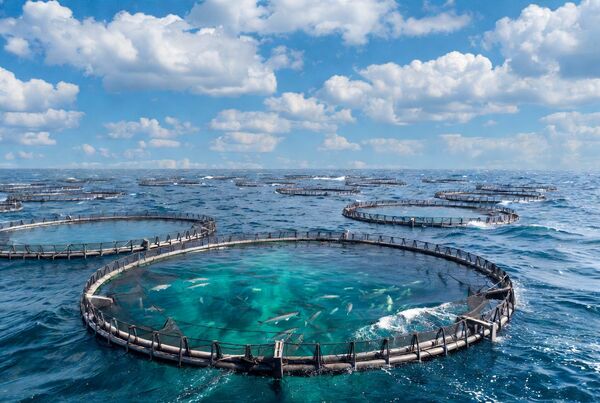
The global aquaculture sector is in the midst of a massive industrial transformation. As wild-catch fisheries plateau, the demand for marine protein is surging. To bridge this deficit, fish farming has rapidly evolved from small coastal setups to highly industrialised, high-density offshore marine cages and vast land-based Recirculating Aquaculture Systems (RAS). At the heart of this multibillion-pound industry is a critical logistical challenge: biomass transfer. Moving millions of live fish safely and efficiently requires infrastructure that can handle heavy industrial demands while fiercely protecting biological welfare.
Are your transfer pipelines protecting your yield or damaging your bottom line?
Let's dive into the mechanics of modern aquaculture fluid dynamics and explore how upgrading your conduit infrastructure can maximise both operational efficiency and fish welfare.
Need advice? Drop us an email at sales@megaflex.co.uk.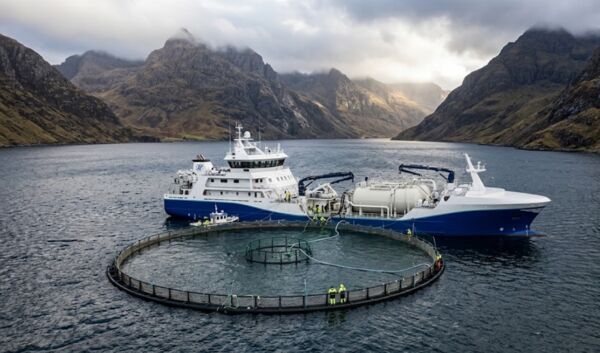
Quick Summary: Maximising Aquaculture Efficiency
- 1. Fish Welfare & Smooth Bore Hydrodynamics. Discover how smooth internal pipelines prevent scale loss and physiological stress. Check our CSS product page
- 2. Surviving the Marine Environment. Learn why external scuff strips are non-negotiable for wellboat and quayside operations.
- 3. Biosecurity & Compliance. Understand the importance of non-toxic, FDA-approved materials in modern closed-valve systems.
- 4. Specialised B2B Delivery Logistics. How Megaflex ensures your 12-inch, straight-length hoses arrive safely without forklift damage.
- Ready to upgrade your infrastructure? Jump to our product breakdown.
Why Invest in Premium Biomass Transfer Equipment?
The economics of global aquaculture make high-performance equipment essential. The sector is expected to reach $262 billion worldwide by 2026, with Scotland’s finfish industry at the forefront in the EU.
Scottish Atlantic salmon output has recently risen above 190,000 tonnes.Every kilogram of that valuable harvest has to be pumped, graded, and collected. Manual netting has given way to modern pneumatic and hydraulic fish pumps, yet those pumps only perform as well as the hoses and pipes that connect them.
Key operational realities driving equipment upgrades:
- The Stress-Lactic Acid Connection: Fish sucked into turbulent, rough-walled piping experience acute panic. Elevated cortisol shifts their metabolism into an anaerobic state, flooding muscle tissue with lactic acid. At harvest, this results in softer meat, fillet gaping, and reduced shelf-life.
- The Cost of Frictional Damage: Fish skin is highly vulnerable. Hoses that collapse under vacuum or feature ridged internal walls cause severe scale loss and lacerations, drastically reducing market value and leaving fish susceptible to infections.
- Stringent Biosecurity Protocols: Following historic viral outbreaks like ISA, operations now rely heavily on "closed-valve technology." Your transfer systems must form a perfectly sealed, leak-proof environment to prevent pathogen shedding and cross-contamination.
Step 1: Prioritise Fish Welfare with Smooth Bore Hydrodynamics
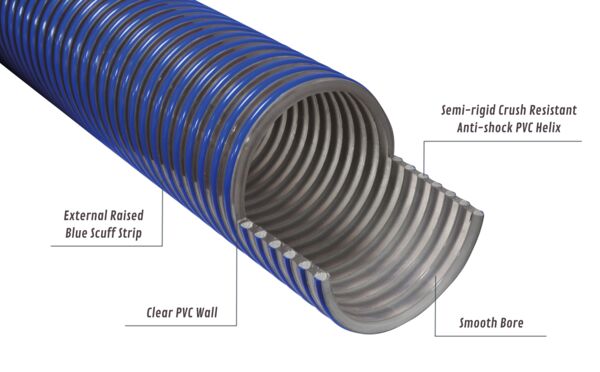
When high-capacity pumps move hundreds of tonnes of live fish per hour, the internal geometry of your hose becomes the most critical interface on your farm. A completely smooth inner wall (bore) minimises friction and prevents the turbulence-inducing ridges found in standard corrugated ducting.
- Gentle Transfer: A smooth bore ensures laminar fluid dynamics, meaning the fish glide through the conduit safely, preventing the epidermal lacerations that ruin premium-grade harvests.
- Visual Flow Monitoring: Using a clear, flexible PVC cover allows operators to visually monitor biomass flow in real-time. This prevents dangerous crowding bottlenecks and ensures fish aren't becoming exhausted during transit.
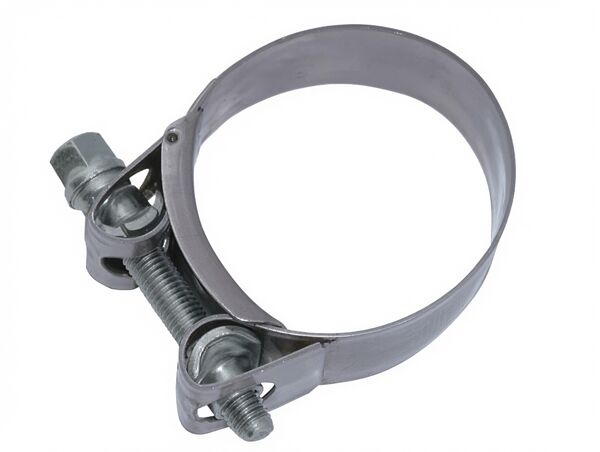
Tip: Always pair smooth-bore hoses with high-quality, perfectly fitted clamps. A stepped joint between the metal fitting and the hose can harbor bacteria. Our Stainless Steel Heavy-Duty Super Clamps (fitting up to 408mm O.D.) ensure a gap-free, secure transition.
Step 2: Defend Against Extreme Marine Abrasion
Whether dragged over the steel diamond-plate deck of a wellboat or maneuvered against a concrete processing pier in Aberdeen, transfer hoses face relentless external friction. Standard smooth-outer hoses degrade rapidly in these environments, eventually exposing the internal helix and causing catastrophic vacuum failure.
- The Scuff Strip Advantage: Advanced aquaculture hoses integrate an external raised scuff strip. This sacrificial wear-layer absorbs ground abrasion and drag damage, vastly improving the equipment's operational lifecycle.
- High Vacuum Resistance: To prevent crushing under the immense suction required to lift water 9 meters, the hose must feature a semi-rigid, anti-shock spiral helix.
Step 3: Ensure Food-Grade Safety & Biosecurity
Protecting the end consumer and your farm's biological integrity is non-negotiable. Transfer hoses are high-risk vectors for disease transmission if not engineered correctly.
- Non-Toxic Materials: Ensure your conduits are fully compliant with FDA, REACH, and RoHS standards. They must be strictly DEHP-free, eliminating the risk of toxic plasticisers leaching into the water.
- Chemical & Weather Resistance: Hoses must withstand frequent cleaning with harsh therapeutants and operate seamlessly in freezing maritime environments (-10°C) without cracking or losing their bend radius.
Step 4: Navigate Industrial Logistics & Supply Challenges
Massive 10-inch and 12-inch transfer hoses cannot be coiled without fracturing their anti-shock spirals. They must be shipped in straight 10-meter or 12-meter lengths, making standard logistics incredibly complex.
- Dedicated B2B Freight: Look for suppliers who offer dedicated lorry delivery to mainland hubs like Glasgow and Aberdeen. Flat-rate carriage models for bulk loads (e.g., up to 13 straight lengths per lorry) make scaling highly economical.
- Damage-Free Palletisation: Forklift damage is a notorious problem in hose transport. Specialised 8-meter protective pallets prevent third-party drivers from piercing the structural walls of your crucial infrastructure.
Premium Aquaculture Infrastructure Breakdown
To meet the exact biological and mechanical parameters demanded by the Scottish and global finfish markets, Megaflex presents our flagship commercial aquaculture solution.
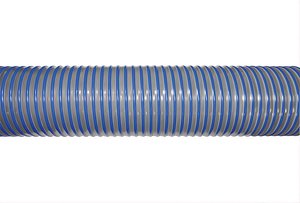
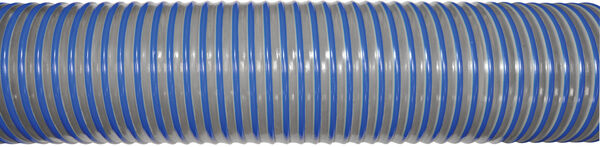
Engineered for high-yield salmon farming and high-volume processing, the CSS hose balances extreme mechanical durability with uncompromising biological welfare standards. It features a crush-resistant white PVC spiral helix completely encapsulated within a clear, flexible PVC cover, fortified by an external raised blue scuff strip for maximum abrasion resistance.
- High Vacuum Capable: Rated up to 9m of H₂O for rapid, high-volume lifting.
- Yield-Protecting Bore: Perfectly smooth inner wall minimises scale damage and biological stress.
- Food-Grade Certified: DEHP-free, non-toxic, and fully compliant with FDA, REACH, and RoHS.
- Ready to Connect: Perfectly suites our Heavy Duty Super Clamps (suits up to 408mm O.D. hose).
- Temperature: -10°C to 60°C.
- Suitable Media: Fish, Water, Sewage, Slurry, Powder.
- Applications: Fish transfer, Dredging, Commercial aquaculture, Salmon farming, Marine water transfer, High volume fish processing.
- Key Sizes:
| Part | Inner Diameter (") | Inner Diameter (mm) | Outer Diameter (mm) | Wall Thickness (mm) | Working Pressure (bar) | Burst Pressure (bar) | Vacuum Rating (mH2O) | Bend Radius (mm) | Weight (g/m) | Length (m) |
|---|---|---|---|---|---|---|---|---|---|---|
| CSS-102 | 4 | 102 | 118 | 8 | 4.3 | 12.9 | 9 | 400 | 3950 | 30 |
| CSS-127 | 5 | 127 | 144 | 8.6 | 4 | 12 | 9 | 550 | 5250 | 30 |
| CSS-152 | 6 | 152 | 172 | 10.2 | 3.7 | 11.1 | 9 | 650 | 7450 | 30 |
| CSS-204 | 8 | 204 | 227 | 11.5 | 3.3 | 9.9 | 9 | 850 | 11750 | 10 |
| CSS-254 | 10 | 254 | 282 | 14 | 3 | 9 | 9 | 1250 | 16600 | 10 |
| CSS-304 | 12 | 304 | 342 | 19 | 1.5 | 4.5 | 9 | 1600 | 19500 | 10 |
| CSS-356 | 14 | 356 | 396 | 20 | 9 | 2600 | 22000 | 10 |
Final Thoughts
As farm operations scale and global demand surges, the cost of inefficient biomass transfer is simply too high. Upgrading to engineered solutions like the CSS Heavy Duty Fish Transfer Hose ensures your high-value harvest reaches processing with minimal stress, pristine quality, and maximum market value.
To support your immediate site requirements, Megaflex actively maintains safety stock of our 12" hose in 10-meter and 12-meter lengths, alongside several 20-meter coils of our 6" and 8" profiles. We also supply the heavy-duty clamping solutions needed to secure them.
Ready to upgrade your fleet or facility? Contact our B2B specialised team at sales@megaflex.co.uk today.
Fish Transfer Hose FAQ
Got questions? Find answers below or email us!
Why do I need an external scuff strip on my aquaculture hose?
In offshore pens and wellboat operations, hoses are relentlessly dragged across rough docks, boat edges, and processing platforms. A standard smooth hose will quickly wear through its outer cover, exposing the internal wire or helix, leading to vacuum failure. A raised scuff strip acts as sacrificial armor, absorbing the friction and significantly extending the life of your hose.
How do you ship 10" and 12" large-diameter hoses safely?
Unlike smaller hoses, 10-inch and 12-inch heavy-duty hoses have an immense bend radius and rigid structure, meaning they cannot be coiled without causing catastrophic structural damage. We supply these in robust straight lengths (10m or 12m) via dedicated lorries to hubs like Aberdeen and Glasgow. For self-collection, we pack them on specially designed 8-meter protective pallets that prevent transport drivers from accidentally driving forklift forks through the PVC.
Are your hoses safe for live fish transfer and food processing?
Absolutely. The CSS hose is manufactured from non-toxic, DEHP-free materials. It is fully compliant with FDA regulations (Title 21 CFR 177.2600 Part E for aqueous foods), REACH, and RoHS standards, ensuring zero harmful chemical plasticisers enter the water during fish pumping and transfer.
How do I connect the CSS hose securely?
Because ensuring biosecurity means preventing stepped joints where bacteria can hide, tight and secure clamping is essential. We recommend our Stainless Steel Heavy-Duty Super Clamps, which perfectly suit hoses up to 408mm O.D., and are specially designed in stainless steel to meet the demands of wet environments.