Understanding Shore Hardness of Flexible Tubes: A Guide to PVC, Polyurethane, Nylon, and More
Updated September 15, 2026

Flexible tubes, like those made from PVC, polyurethane, nylon, and silicone, are incredibly useful in all sorts of industries—think manufacturing, healthcare, automotive, and building work. They’re the unsung heroes that carry fluids, gases, or even protect cables, bringing flexibility and toughness to the table.
One of the big things that decides how well they work is something called Shore hardness.
It’s a simple way to measure how much a material resists being dented or squashed. This hardness affects how bendy or strong a tube is and helps figure out if it’s right for a particular job. Let’s take a closer look at what Shore hardness means for these tubes, breaking down the popular materials and where they shine!
PVC Flexible Tubes
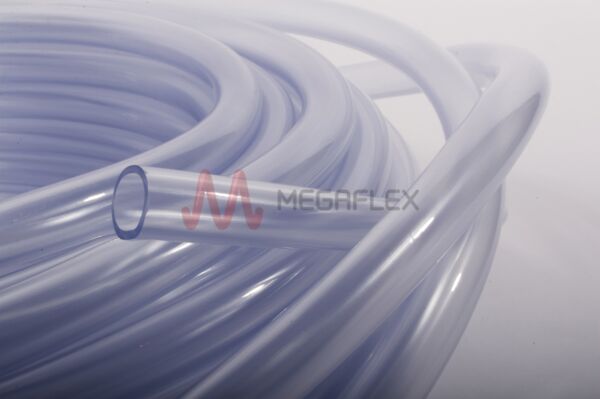
- Shore Hardness Range: Usually between 50A and 90A (on the Shore A scale).
- Uses: Moving water, air, or light chemicals around.
- Temperature Range: From -20°C up to 60°C.
- Standout Features: economical, light, and fairly bendy.
- Product Code: C
Polyvinyl chloride, or PVC for short, is a popular choice for flexible tubes because it’s affordable and can adapt to lots of different tasks. Its Shore hardness sits between 50A (really soft and easy to bend) and 90A (quite firm). If you’ve got a softer PVC tube, say around 50A to 65A, it’s brilliant for gentle jobs like carrying water in a garden hose or keeping fish tanks running smoothly. On the other hand, the harder stuff—around 80A to 90A—works well for tougher things like protecting cables or handling air in simple systems. PVC is great because it can stand up to mild chemicals and doesn’t mind a bit of weather, making it a solid all-rounder. That said, it’s not the best when things get really hot or cold—it’s got its limits compared to some other materials we’ll talk about.
Polyurethane Flexible Tubes
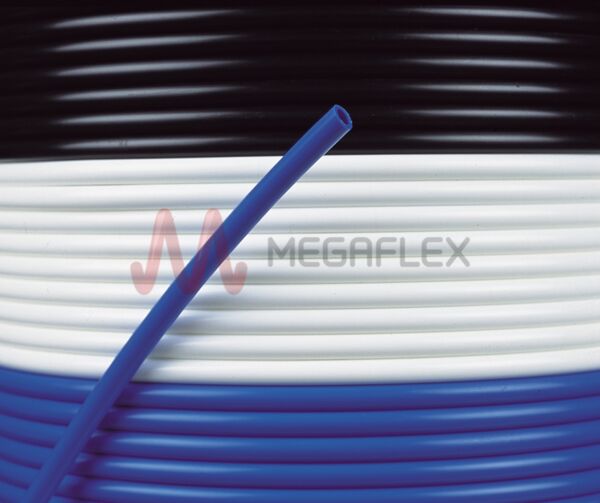
- Shore Hardness Range: Between 70A and 95A (Shore A scale).
- Uses: Air systems, hydraulic lines, or moving rough materials.
- Temperature Range: From -40°C to 80°C.
- Standout Features: Tough against wear, very bendy, and strong.
- Product Code: LDPE
Polyurethane tubes, often just called PU, are a step up when you need something that can take a bit of a beating. Their Shore hardness ranges from 70A to 95A, so they’re firmer than the softer PVC options but still nicely flexible. This makes them a top pick for tricky spots, like powering air tools or keeping robotic setups running smoothly. They’re brilliant at bouncing back if they get kinked and can handle rough surfaces without wearing out fast. Imagine a PU tube at 85A—it’s tough enough for industrial air lines but still bends easily around corners. Plus, with a temperature range from -40°C to 80°C, they’re happy in chilly warehouses or outdoors in the British weather, doing better than PVC when things get tough.
Nylon Flexible Tubes
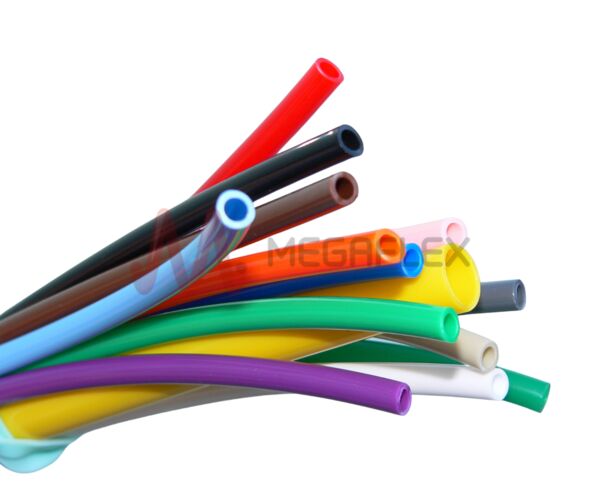
- Shore Hardness Range: From 60D to 80D (on the Shore D scale).
- Uses: Fuel lines, high-pressure air, or car parts.
- Temperature Range: From -40°C to 120°C.
- Standout Features: Really strong, resists chemicals, and stays stiff.
- Product Code: NMF
Nylon tubes are a different beast, with a hardness measured on the Shore D scale—between 60D and 80D. That means they’re stiffer and less bendy than PVC or PU, but that’s exactly why they’re so good for certain jobs. They’re built for strength, perfect for things like carrying fuel or handling high-pressure air in cars or machinery. A nylon tube at 70D, for example, can shrug off oils, solvents, and even sunlight, so it lasts ages in garages or factories. With a temperature range up to 120°C, it’s happy in hotter conditions too. The downside? It’s not great if you need something to twist and turn a lot—it’s more about staying solid and reliable than being flexible.
Silicone Flexible Tubes
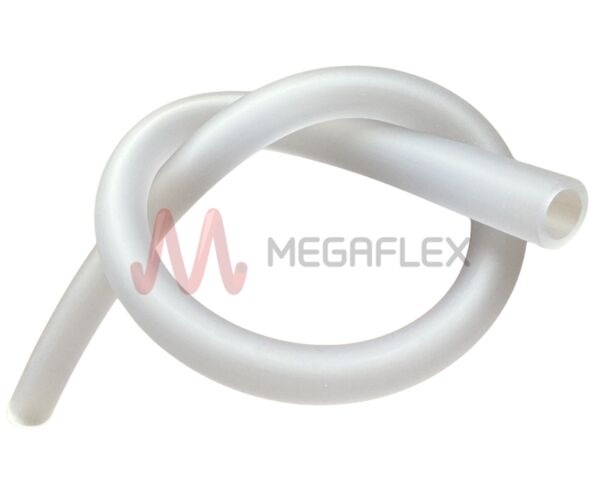
- Shore Hardness Range: From 30A to 80A (Shore A scale).
- Uses: Medical gear, food processing, or hot fluid jobs.
- Temperature Range: From -60°C to 200°C.
- Standout Features: Handles extreme heat or cold, safe for bodies, and super soft.
- Product Code: SIL
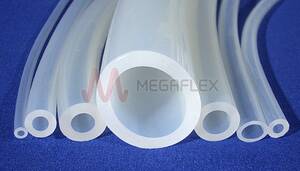
Silicone tubes are special because they can be incredibly soft—starting at 30A—and still go up to 80A for more strength. They’re amazing at dealing with wild temperatures, from freezing -60°C right up to a scorching 200°C. That makes them perfect for things like medical pumps (where a 50A tube is soft and gentle) or moving hot liquids in food factories (where 80A adds toughness). They’re safe for human use, so you’ll see them in hospitals, and they can handle being cleaned over and over without breaking down. Compared to PVC or PU, silicone is the champion of extreme conditions, whether it’s a cold storage room or a steamy kitchen.
Viton Flexible Tubes
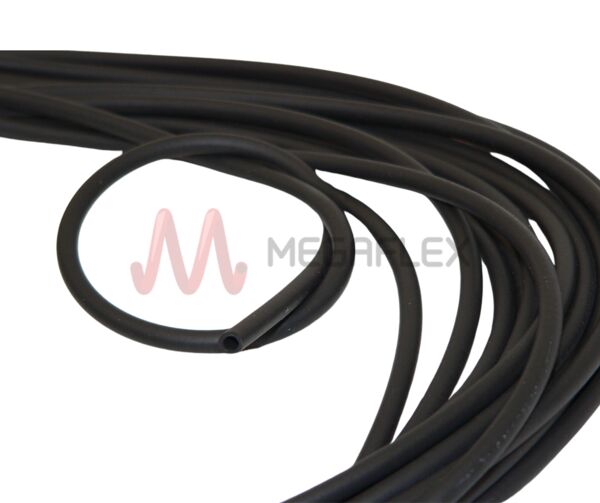
- Shore Hardness Range: 60A–90A (Shore A).
- Typical Applications: Chemical processing, fuel lines, and high-temperature industrial work.
- Temperature Range: −20°C to 250°C.
- Key Advantages: Outstanding chemical resistance, heat stability, and long service life.
- Product Code: VIT
Viton tubing is a robust option, with a Shore hardness of 60A to 90A that gives it a firm but still workable feel. It performs reliably from −20°C up to 250°C, so it suits demanding jobs such as moving aggressive chemicals in a processing plant (where 60A provides a little extra flexibility) or carrying hot fuels in automotive systems (where 90A adds stiffness). Its main strength is resistance to acids, oils, and solvents that would quickly damage other materials. It also holds up well against heat and ageing, which helps it last in engine bays, furnaces, and similar harsh environments. Where PVC or PU would struggle, Viton is the better choice for extreme chemical and temperature conditions.
Santoprene Flexible Tubes
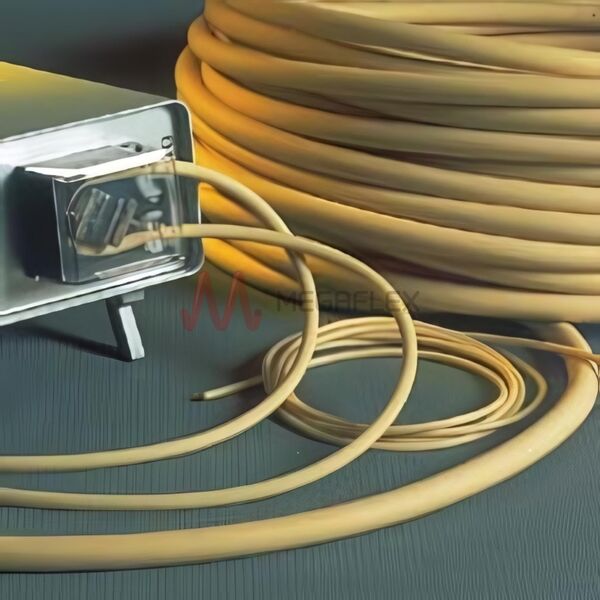
- Shore Hardness Range: From 45A to 80A (Shore A scale).
- Uses: Water systems, appliance hoses, or light chemical transfer.
- Temperature Range: From -40°C to 135°C.
- Standout Features: Great flexibility, weather resistance, and eco-friendly.
- Product Code: GPR
Santoprene tubes bring a versatile Shore hardness range of 45A to 80A, blending softness with strength for a wide range of jobs. They handle temperatures from -40°C to 135°C, making them a solid choice for both chilly and warm conditions. A 45A Santoprene tube is lovely for flexible tasks like water lines in a garden sprinkler, while an 80A version suits more robust uses, like hoses in washing machines. What makes Santoprene special is its balance—it’s tough against weather, UV rays, and even some chemicals, yet it’s softer than nylon, making it easier to work with. It’s also recyclable, which is a bonus for eco-conscious projects. Compared to PVC or PU, Santoprene offers a greener option with decent flexibility, shining in outdoor or appliance settings where durability and ease of use matter.
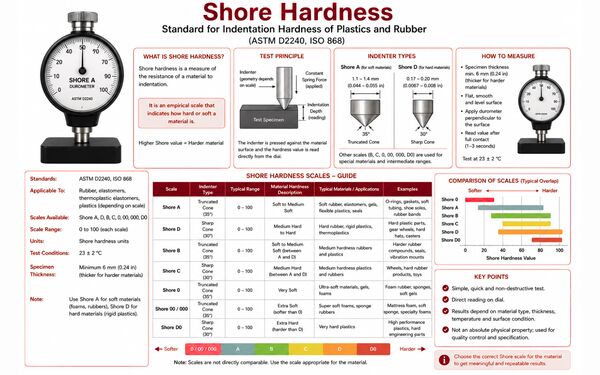
What is Shore Hardness?
Shore hardness is just a way to check how hard or soft something is by seeing how much it dents when you press it with a tool called a durometer. There are two main scales: Shore A for softer stuff and Shore D for harder things. On Shore A, 0 is super soft, and 100 is firm—think 50A as squidgy and 90A as solid. On Shore D, it’s the same idea, but for stiffer materials—60D is semi-rigid, and 80D is really hard. For tubes, this tells you if they’ll bend easily or stand up to pressure, helping you pick the right one for the job.
Comparing Shore Hardness Across Materials
With so many flexible tube options—PVC, polyurethane, nylon, silicone—it’s worth stepping back to see how their Shore hardness stacks up side by side. Each material sits on a spectrum of softness to stiffness, and that’s what dictates their role in the world. PVC spans 50A to 90A on the Shore A scale, making it a middle-ground champ—soft enough for gentle bends at 50A, yet firm enough at 90A to hold its own in light industrial jobs.
Polyurethane, or PU, nudges up to 70A-95A, overlapping with PVC’s harder end but bringing extra toughness, so a 70A PU tube bends like a firm PVC one but shrugs off wear better. Then there’s nylon, leaping to the Shore D scale at 60D-80D—it’s a different beast, rigid and unyielding compared to the others, perfect for high-pressure tasks where a 60A PVC would flop. Silicone, meanwhile, dips as low as 30A—super soft for delicate medical uses—yet climbs to 80A, matching PVC’s harder side but with far better heat tolerance.
This spread means you’ve got options: soft and pliable for tight spaces, or stiff and strong for heavy duty. Knowing where they sit helps you pick the winner for your specific job—whether it’s flexibility, durability, or a bit of both.
How Shore Hardness Affects Installation
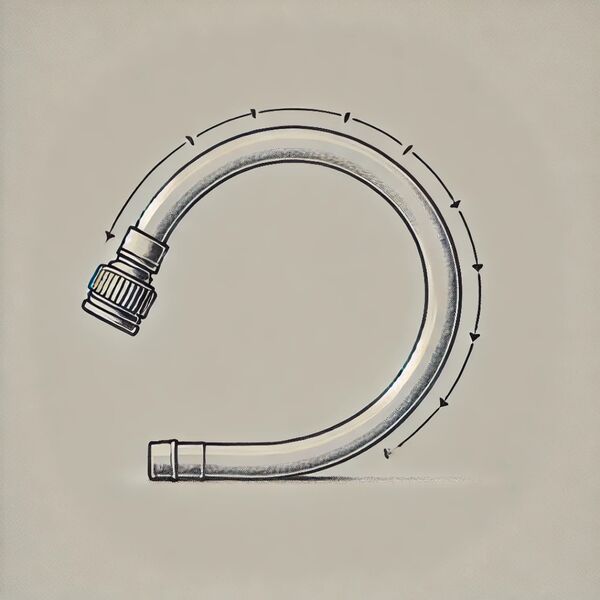
Shore hardness doesn’t just influence how a tube performs—it also plays a massive role in how easy (or tricky) it is to install. Softer tubes, like a 50A PVC or 30A silicone, are a breeze to work with—they bend and twist without much fuss, slotting into cramped corners or winding around obstacles on a building site. You can push them into place with minimal tools, which is handy for quick jobs like setting up a water line or threading cables through a tight space. But there’s a catch—softer tubes can kink if you’re not careful, especially under pressure, so you might need clips or supports. Firmer options, say a 90A PU or 70D nylon, are a different story. They resist bending, which is brilliant for straight runs or high-pressure systems—like a fuel line in a van—but you’ll need more elbow grease or even a heat gun to shape them. Nylon’s stiffness, for instance, means it’s less likely to sag, but routing it through a complex setup takes planning. PU strikes a middle ground—firm enough to hold shape, bendy enough to manoeuvre. So, when you’re planning an installation, think about the space and tools you’ve got. A soft tube saves time in a pinch; a hard one needs effort but pays off in stability.
Testing Shore Hardness in Real Life
Shore hardness might sound technical, but you can get a feel for it without fancy gear—just your hands and a bit of common sense. A durometer is the proper tool, pressing into the material to give a number, but in a pinch, you can judge it roughly yourself. Take a 50A PVC tube—it’ll feel soft and squidgy, like a thick rubber band you can squish between your fingers. Press a 90A PU tube, and it’s firmer, pushing back more, like a tough plastic bottle cap. Nylon at 70D? It’s stiff as a board—barely dents when you squeeze, feeling more like a hard plastic ruler. Silicone at 30A is almost spongy, super easy to compress, while at 80A it’s closer to a solid rubber mat. Why bother? Well, if you’re picking tubes for a job—say, a home brewery or a car repair—this quick test can tell you if it’s too soft to hold pressure or too hard to bend where you need it. For proper projects, suppliers like Megaflex can provide exact hardness specs, but a hands-on check gives you a head start. It’s a simple way to connect the numbers to what you’ll actually feel and use on the ground.
Environmental Impact on Shore Hardness

Shore hardness isn’t set in stone—it can shift depending on the environment a tube’s in, and that’s worth knowing before you commit. Take PVC at 50A—it’s nicely bendy in a mild room, but drop it to -20°C, and it might stiffen up, feeling closer to 60A, risking cracks if you force it. Heat it past 60°C, and it softens, losing shape like a melted sweet. Polyurethane (70A-95A) fares better—its toughness holds from -40°C to 80°C, but push beyond that, and it can harden or soften slightly, affecting how it bends. Nylon (60D-80D) is a sturdy one—its stiffness stays solid up to 120°C, though extreme cold might make it brittle over time. Silicone’s the star here—30A to 80A stays consistent from -60°C to 200°C, barely flinching in heat or cold, which is why it’s a lifesaver in ovens or freezers. Weather matters too—UV rays can harden PVC’s surface over years, while nylon shrugs them off. Wet conditions? PU and silicone resist swelling, but cheap PVC might soak up moisture and soften. So, when picking a tube, think about where it’ll live—indoors, outdoors, hot, cold, wet—and how that might tweak its hardness and performance over time.
Customising Tubes with Shore Hardness in Mind
One brilliant thing about flexible tubes is that you can often tweak their Shore hardness to suit your needs—especially if you’re working with a supplier who offers bespoke options. Say you’re setting up a pneumatic system and need a PU tube that’s not too soft (like 70A) or too firm (like 95A)—some manufacturers can dial it to, say, 85A, giving you just the right mix of flexibility and strength. PVC’s the same—want something softer than 50A for an ultra-bendy water line? They might blend it down to 45A if you ask. Nylon’s trickier, as its Shore D range (60D-80D) is less flexible to adjust, but you can still pick a spot—like 65D—for a balance of stiffness and slight give. Silicone’s a dream for this—30A too floppy for your food line? Bump it to 60A for more backbone without losing heat resistance. Customising like this isn’t just for big factories—small businesses or even hobbyists can benefit. Chat to a supplier like Megaflex, and they’ll often work with you to tweak hardness, wall thickness, or even colour. It’s a way to get a tube that’s not just off-the-shelf but perfectly tuned for your pump, machine, or DIY project—saving headaches down the line.
Why Shore Hardness Matters
Getting the Shore hardness right is key to making sure a tube does what you need. A soft 60A PVC tube is lovely for trickling water but might squash flat if you push it too hard—whereas a 70D nylon tube laughs at high pressure. A 70A PU tube can twist around tight corners, but an 80D nylon one won’t budge much. It’s not just about bending, though—temperature and surroundings matter too. Picking the wrong hardness could mean a tube fails when it’s too hot, cold, or under strain, so it’s all about safety and getting the job done properly.
Where to Buy Flexible Tubes?

Finding the right flexible tubes is easy if you know what to look for. Try searching online with phrases like “PVC tubing for water,” “polyurethane tubes for air systems,” “nylon tubes for fuel,” or “silicone tubes for medical use.” You could also try “flexible tubing suppliers in the UK,” “tubes for high heat,” or “tough tubing for wear.” These help you dig up options that fit your needs—whether it’s softness, strength, or standing up to the elements. Check out local suppliers, online shops, or companies like Megaflex, who can sort you out with exactly what you’re after.
That’s our full rundown on Shore hardness and flexible tubes. At Megaflex, we’re all about matching the right material to your project, so you get something that works brilliantly every time.
Frequently Asked Questions (FAQ)
Q: What’s Shore hardness, and why should I care about it for tubes?
A: Shore hardness shows how soft or hard a material is by testing how much it dents. It’s important because it tells you if a tube will bend easily or hold up under pressure—vital for picking one that suits jobs like moving liquids or protecting wires.
Q: How do PVC and polyurethane tubes differ in hardness?
A: PVC tubes go from 50A to 90A—soft to firm—and are decently bendy and cheap. Polyurethane ones, from 70A to 95A, are a bit harder, tougher against wear, and spring back well, making them better for rougher tasks.
Q: When’s the best time to pick nylon tubes?
A: Go for nylon (60D-80D) if you need something strong and stiff that can handle high pressure or heat, like fuel lines or car parts. It’s not as bendy as PVC or PU, so it’s great for solid, long-lasting setups.
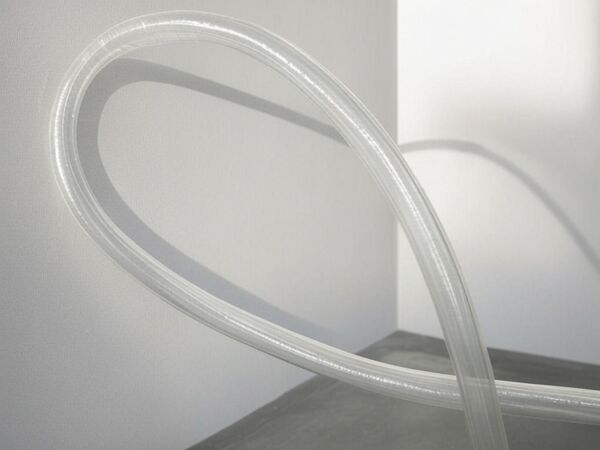
Q: What’s so great about silicone tubes?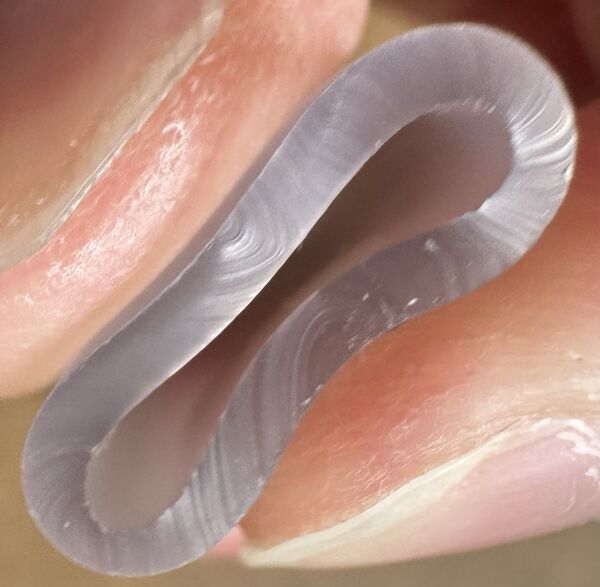
Q: Can soft tubes handle high pressure?
A: Soft tubes, like 50A-60A ones, might collapse if the pressure’s too high. For that, you’d want harder stuff like nylon (60D-80D) or firm PU (85A-95A) to keep things solid and safe.
Q: Where can I get flexible tubes in the UK?
A: Try suppliers like Megaflex—they’ve got PVC, PU, nylon, and silicone tubes made to fit your needs. Search online with terms like “flexible tubes for air” or pop into industrial shops for custom options.
Need a tube that’s spot on? We’ll find you the perfect match for whatever you’re working on!
www.megaflex.co.uk