Flexible PTFE Tubing: The Engineer's Guide
The Engineer’s Guide to Flexible PTFE Tubing: Properties, Critical Uses & Sizing
Updated September 9, 2026
Product links mentioned in this blog:(PTFE) Flexible Thin Wall PTFE Tubing
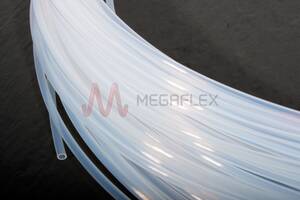
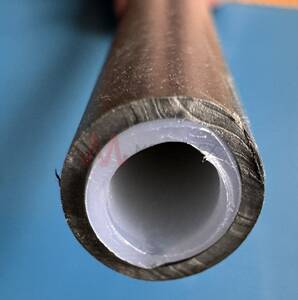
Polytetrafluoroethylene (PTFE) tubing is a high-performance fluoropolymer engineered for demanding chemical transfer, electrical insulation, medical fluid paths, and extreme thermal environments. Manufactured via paste extrusion using high-purity virgin resins, PTFE tubing provides an unmatched combination of near-universal chemical inertness, high dielectric strength, and an exceptionally wide operating temperature range from -200°C (-328°F) up to 250°C (482°F) in static conditions. Where conventional thermoplastics like PVC, polyurethane, or standard elastomers degrade, melt, stress-crack, or leach plasticisers, flexible PTFE maintains total dimensional and structural integrity. This comprehensive engineering guide examines the physical, mechanical, and electrical properties of flexible PTFE tubing, international manufacturing standards (ISO, AMS, ASTM, BS), assembly guidelines, and sizing criteria to ensure safe and efficient specification. Need tailored technical advice? Contact our engineering team at sales@megaflex.co.uk.
Why is flexible thin-wall PTFE tubing the global engineering benchmark for critical applications?
Well, let’s dive in!

How to Select the Perfect Flexible PTFE Tubing in 6 Steps
- 1. Determine the Tubing Size and Tolerances. Specify the exact inside diameter (ID), wall thickness, and outside diameter (OD). Check dimensional tolerances against international standards such as ISO 13000-1 para. 4.2.4 or AMS specifications.
- 2. Identify the Carried Medium and Chemical Exposure. Confirm resistance across aggressive mineral acids, caustic alkalis, high-purity solvents, fine chemicals, or reactive process gases.
- 3. Assess Thermal Dynamics and Pressure Ratings. Account for static limits up to 250°C, dynamic limits up to 200°C, cryogenic performance approaching absolute zero, and apply temperature de-rating factors to calculated burst and working pressures.
- 4. Factor in Bending Radii, Assembly & Environmental Stresses. Follow correct assembly prescriptions: calculate the minimum bend radius ($R_{min} = 9\text{ to }11 \times \text{OD}$ for 1 mm wall thickness at 20°C), avoid sharp bends that cause tube collapse or cracking, and leverage 20+ year outdoor UV and weather immunity.
- 5. Consider Special Formulations and Regulatory Compliance. Confirm adherence to food contact requirements (FDA 21 CFR 177.1550, EU 10/2011), electrical insulation standards (UL 224, CSA), or evaluate custom carbon-filled anti-static grades and coloured profiles.
- 6. Select the Compatible Fitting System & Storage Practice. Match tubing with 316 stainless steel twin-ferrule compression fittings or flared connectors, and adhere to proper packaging and storage protocols to prevent coil crushing.
Why Invest in Quality Flexible PTFE Tubing?
In high-stakes fluid transfer and electrical insulation, tubing failure is not an option. Inferior polymer lines can swell, become brittle, or leach harmful extractables into high-purity media, causing contamination, costly line blowouts, and unplanned plant downtime. High-grade paste-extruded PTFE tubing delivers consistent mechanical, thermal, and electrical performance across the most demanding operating envelopes.
Whether routing reagents in chemical process industries (CPI), insulating wire harnesses in aerospace systems, or assembling analytical chromatography instruments, premium PTFE tubing provides dependable reliability.
Key Physical and Mechanical Benchmarks of Virgin PTFE:
- Specific Density: 2.18 g/cm³ (tested to ASTM D 792), providing a dense, non-porous fluoropolymer barrier.
- Tensile Strength: 25 N/mm² (tested to ASTM D 4895), ensuring high tensile retention under mechanical pull and internal pressure.
- Elongation at Break: 300% (tested to ASTM D 4895), delivering flexibility and strain tolerance during complex routing.
- Dielectric Breakdown Strength: 50 kV/mm at 0.5 mm wall thickness (tested to ASTM D 149), providing world-class high-voltage electrical insulation.
- Dielectric Constant: 2.1 at 50 · 10⁹ Hz (tested to ASTM D 150), remaining stable across wide frequency bands.
- Dissipation Factor:< 0.0002 at 50 · 10⁹ Hz (tested to ASTM D 150), preventing signal loss and dielectric heating.
- Volume & Surface Resistivity: Volume resistivity of 10¹⁷ Ω · cm and surface resistivity of 10¹⁵ Ω (tested to ASTM D 257).
The Core Advantages of High-Grade PTFE Tubing:
- Reduce Lifetime Costs: Exceptional resistance to thermal degradation, stress cracking, and weathering eliminates premature hose replacements and saves maintenance labour.
- Ensure Complete Operational Safety: High burst pressure ratings combined with strict dimensional control prevent pinhole leaks and dangerous chemical spray-outs.
- Optimise Flow & Prevent Clogging: An ultra-low coefficient of friction (0.05 to 0.10) creates a non-wetting bore that eliminates media build-up, reduces laminar friction, and simplifies clean-in-place (CIP) protocols.
- Maintain Process Purity: Formulated from FDA-compliant paste-extrusion resins free of plasticisers, virgin PTFE preserves the purity of food, pharmaceutical, and laboratory fluids without imparting taste, odour, or chemical contaminants.
Ready to specify the correct tubing? Jump to our step-by-step selection guide or contact our technical engineers at sales@megaflex.co.uk for project support.

Step-by-Step Guide to Selecting the Right PTFE Tubing
Step 1: Determine the Tubing Size and Tolerances
Proper dimensional specification ensures optimal flow rates, minimises pressure drops, and provides a secure, leak-free connection with fittings:
- Inside Diameter (ID): Dictates fluid velocity and volumetric flow rate. Specifying an undersized bore increases system backpressure, while an oversized bore adds unnecessary weight and bulk.
- Outside Diameter (OD): Crucial for fitting retention. Compression ferrules and push-in gripping rings require tight OD tolerances to maintain seal integrity under pressure cycles.
- Wall Thickness: Directly impacts mechanical hoop strength, burst pressure, and kink resistance. Thicker walls withstand higher internal working pressures, while thinner walls maximise flexibility and reduce bending resistance.
- Manufacturing Tolerances (ISO 13000-1 para. 4.2.4): High-precision thin-wall tubing adheres to rigorous tolerance standards:
- Inner Diameter (ID) Tolerances: For ID < 5 mm: ±0.25 mm; for ID from 5 mm up to < 25 mm: ±5%.
- Wall Thickness Tolerances: For wall < 1 mm: ±0.1 mm; for wall ≥ 1 mm: ±10%.
- Alternative Dimensional Standards: Beyond metric industrial thin-wall tubing (TPS), specialised sizing classes include AMS Spaghetti tubing (Standard Wall AMS 3653E, Thin Wall AMS 3655B, Light Wall AMS 3654C), fractional sizing (1/8" to 3/4"), ASTM D3295, and BS EN 60684-3-145 (Sheet 145).
Tip: Always match the external diameter of the tubing to the precise imperial or metric specification of your fitting ferrule to prevent leak paths or tube slippage.

Step 2: Identify the Carried Medium & Chemical Exposure
PTFE is practically inert against almost all known industrial chemical elements, compounds, and solvents. Its robust carbon-fluorine (C–F) bond prevents degradation across an extensive range of aggressive media:
- Concentrated Acids: Nitric, sulfuric, hydrochloric, hydrofluoric, and phosphoric acids, as well as aqua regia.
- Strong Alkalis: High-concentration sodium hydroxide, potassium hydroxide, and aqueous ammonia.
- Aggressive Solvents: Ketones, esters, ethers, chlorinated hydrocarbons, and aromatic solvents (insoluble in almost all solvents up to 300°C).
- Pure Substances & Pharmaceuticals: Ultra-pure water, active pharmaceutical ingredients (APIs), biological reagents, and parenteral fluids.
- Industrial Gases: High-pressure oxygen, dry nitrogen, chlorine gas, ozone, and volatile fuels.
Known Chemical Exceptions:
PTFE is only attacked by a very small group of exceptionally reactive substances:
- Alkali metals in their elemental state (e.g., molten sodium or potassium).
- Chlorine trifluoride (ClF₃) and elemental fluorine gas (F₂) at high temperatures and pressures.
- Certain fluorinated hydrocarbons, which can cause minor, fully reversible swelling without altering the base chemical structure.
- Certain highly fluorinated oils at temperatures exceeding 300°C, which can exert a mild dissolving effect.
Step 3: Assess Thermal Dynamics and Working Pressures

PTFE exhibits distinct thermal characteristics that must be accounted for during system design:
- Working Temperature Limits: In static, unstressed conditions, the upper continuous working temperature is 250°C (482°F). Under dynamic conditions involving mechanical stress, movement, or pressure fluctuations, the upper limit should be reduced to 200°C (392°F).
- Cryogenic Ductility: Unlike standard polymers that shatter at freezing temperatures, PTFE maintains compressive plasticity, toughness, and flexibility at temperatures down to -200°C (-328°F) and approaching absolute zero (-270°C).
- Thermal Decomposition Threshold: PTFE is one of the most stable polymers; there is no appreciable decomposition below 400°C.
- Molecular Transition Points:
- 19°C: A solid-state transition that modifies crystalline structure and alters physical properties such as density and thermal expansion.
- 327°C: The crystalline melting point, where PTFE transitions into an amorphous gel state while retaining its geometric form without liquefying into a free-flowing melt pool.
- Pressure vs. Temperature De-Rating: Burst pressure is a function of tubing dimensions (proportional to wall thickness and inversely proportional to internal diameter) and operating temperature. Working pressure capacity is 100% at 20°C, but decreases as temperature increases (e.g., reducing to roughly 60% at 100°C and 35–40% at 200°C). Working pressures must be de-rated accordingly to ensure safe operation.
- Thermal Expansion & Conductivity: Linear thermal expansion varies with orientation (anisotropic behaviour) resulting from the extrusion process. The thermal conductivity of PTFE remains relatively constant with temperature, making it an effective thermal insulator.
Step 4: Factor in Bending Radii, Assembly & Environmental Stresses

Proper installation and handling protect PTFE tubing from physical defects, wall collapse, and premature failure:
Assembly Prescriptions & Preventing Collapse
During assembly, sharp bending must be avoided. Severe bends cause tubing walls to collapse, drastically reducing cross-sectional flow, creating stress concentration points, and potentially causing the tubing wall to crack under pressure.
Calculating the Minimum Bending Radius
The minimum bending radius ($R_{min}$) depends on dimensions, working temperature, applied pressure, and pressure fluctuations. At room temperature (20°C / 68°F):
- For a 1 mm wall thickness: Minimum bending radius is roughly 9 to 11 times the Outside Diameter (OD).
- Wall Thickness Rule: As wall thickness decreases (e.g., thin-wall or light-wall profiles), the minimum bend radius must be increased to prevent kink-induced wall collapse.
Hot Forming / Pre-Bending Techniques
When complex shapes or tight configurations are required, PTFE tubing can be pre-formed. Heat the tubing to its forming temperature, bend it into the required shape, and cool it in place to set the geometry. Inserting a malleable metallic mandrel or spring inside the bore during bending prevents the tubing walls from collapsing during thermoforming.
Weathering, UV, and Environmental Resistance
PTFE test pieces exposed for more than 20 years to diverse outdoor climates show no measurable change in physical or chemical properties. It is naturally resistant to ultraviolet (UV) radiation and ozone cracking. However, its resistance to high-energy ionising radiation (such as gamma rays) is limited, as radiation can sever the PTFE polymer chain.
Step 5: Consider Special Formulations and Regulatory Compliance
Ensure that chosen tubing meets the statutory and operational criteria of your industry:
- Food Contact and Drinking Water Compliance: Virgin paste-extrusion PTFE resins comply with:
- FDA 21 CFR 177.1550: Authorised for direct and repeated food contact.
- EU Regulation 10/2011 & EC 1935/2004: European food contact materials standards.
- Good Manufacturing Practice: Manufactured under EU 2023/2006 and EU 2005/1895.
- Migration Testing: Evaluated under UNI EN 1186 migration protocols.
- Drinking Water Standards: Meets requirements for potable water transfer including DM 174/04.
- Electrical Insulation & Flammability: Complies with UL 224 and CSA-C22.2 No 198.1 standards for electrical sleeving, delivering high volume resistivity (10¹⁷ Ω · cm), high dielectric breakdown strength (50 kV/mm), and self-extinguishing flame resistance (UL 94 V-0).
- Environmental Directives: Fully compliant with RoHS Directive 2011/65/EU, REACH (EC 1907/2006), and TSCA Section 8(a)(7) requirements, containing no restricted substances or heavy metal stabilisers.
- Filled Rigid Formulations & Custom Colours: While natural translucent white is standard, PTFE tubing can be supplied in custom colours for line identification, or compounded with specialised fillers:
- Carbon-Filled Anti-Static: Dissipates static electrical charges during high-velocity solvent, gas, or fuel transfer in explosive ATEX zones.
- Glass-Filled or Bronze-Filled: Increases compressive strength and mechanical wear resistance.
- Protective PVC Outer Sheathing: Where external mechanical abrasion, dragging, or welding spatter is present, PVC-jacketed PTFE (PTFE60DS
Step 6: Select the Compatible Fitting System & Storage Practice

Maintaining leak-tight connections and preserving raw tubing quality ensures long-term system reliability:
- Twin-Ferrule 316 Stainless Steel Compression Fittings: The preferred connection for high-pressure fluid transfer, high-temperature gases, and chemical lines. The twin-ferrule design grips the outer tube wall securely without constricting the internal flow diameter.
- Push-In Fittings: Suitable for lower-pressure pneumatic controls, inert gas delivery, and automation. Use high-grade nickel-plated brass or stainless steel push-in connectors, ensuring the tube end is cut square with a specialised tube cutter.
- Flared Connections: Standard in ultra-pure semiconductor processing and analytical chemistry, eliminating dead spaces where process fluid can stagnate.
- Storage and Handling Guidelines: To maintain dimensional roundness and prevent ovalisation, keep tubing in its original packaging. Avoid stacking more than two to three layers of bags or coils to prevent weight-induced crushing.
Why Choosing the Right PTFE Tubing Matters
Using incorrect tubing materials or improper sizing can lead to serious operational issues:
- Line Collapse and Cracking: Exceeding the minimum bend radius causes sharp kinking, restricting media flow and accelerating wall cracking under pressure.
- Chemical Attack & Permeation: Mismatched thermoplastics can blister, stress-crack, or soften when exposed to aggressive industrial reagents.
- Thermal Failure: Standard polymers experience creep and blowouts above 80°C–100°C; PTFE maintains strength up to 250°C static service.
- Process Contamination: Additive leaching from lower-grade hoses compromises pharmaceutical batches and delicate analytical readings.
Ready to Choose Your Tubing?
Follow these steps to specify your PTFE tubing:
- Define Media & Environment: Review chemical composition, working pressure, operational temperature (static vs dynamic), and external wear factors.
- Establish Dimensions: Determine required ID, OD, wall thickness, and minimum bend radius.
- Confirm Standards: Check whether your installation requires metric thin-wall (TPS), AMS Spaghetti (SW, TW, LW), ASTM D3295, or BS EN 60684-3-145 dimensions.
- Verify Certifications: Ensure compliance with FDA, EU 10/2011, UL 224, or anti-static conductivity requirements.
- Request Samples & Quotations: Contact Megaflex technical support for dimensional verification and batch traceability.
Broad Industrial Applications for Flexible PTFE Tubing
Flexible PTFE tubing is deployed across a wide variety of advanced industrial sectors:
- Chemical Process Industries (CPI): Metering, dosing, and transferring aggressive mineral acids, caustics, and aggressive solvents.
- Biomedical & Medical Devices: Bio-inert catheter lines, fluid delivery paths, endoscopic channels, and diagnostic instrumentation.
- Aerospace & Avionics: Lightweight, flame-resistant fuel lines, hydraulic fluid sampling, and high-temperature wire harness sleeving.
- Electrical & Electronics: High-voltage dielectric sleeving, sensor lead insulation, and high-frequency communication cabling.
- Analytical Instruments & Laboratories: High-Performance Liquid Chromatography (HPLC), Gas Chromatography (GC), mass spectrometry, and automated reagent manifolds.
- Automotive & Transportation: Turbocharger oil return feed lines, fuel injection systems, and spark-plug wire protection.
- Household Appliances: High-temperature steam pathways in commercial espresso machines, steam irons, and hot beverage vending equipment.
- Cryogenic Operations: Safe handling of liquid nitrogen (-196°C) and other liquefied gases without low-temperature embrittlement.
Technical Sizing Tables & Specifications

Available in standard 25 m, 30 m, 50 m, 100 m and 500 m continuous coils. A few key sizes below:
| Part Code | Outside Diameter (mm) | Inside Diameter (mm) | Wall Thickness (mm) | Weight (g/m) | Min Bend Radius at 20°C (mm) | Working Pressure at 20°C (Bar) | Burst Pressure at 20°C (Bar) | Standard Coils (m) | Availability |
|---|---|---|---|---|---|---|---|---|---|
| PTFE-2X1 | 2.00 | 1.00 | 0.50 | 5.14 | 10 | 40 | 120 | 25/50/100 | In Stock |
| PTFE-6X4 | 6.00 | 4.00 | 1.00 | 34.2 | 40 | 20 | 60 | 25/30/50/100/500 | In Stock |
| PTFE-8X6 | 8.00 | 6.00 | 1.00 | 47.9 | 65 | 13 | 40 | 25/30/50/100/500 | In Stock |
| PTFE-10X8 | 10.00 | 8.00 | 1.00 | 61.6 | 100 | 10 | 30 | 25/30/50/100 | In Stock |
| PTFE-12X10 | 12.00 | 10.00 | 1.00 | 75.3 | 145 | 8 | 24 | 25/30/50/100 | In Stock |
| PTFE-14X12 | 14.00 | 12.00 | 1.00 | 89.0 | 200 | 6 | 20 | 25/50/100 | In Stock |
| PTFE-16X14 | 16.00 | 14.00 | 1.00 | 103 | 260 | 5 | 17 | 25/50/100 | In Stock |

For aerospace, electrical insulation, and instrument wiring, PTFE spaghetti tubing is classified under distinct wall thickness profiles:
- AMS Spaghetti Tubing:
- Standard Wall (SW)
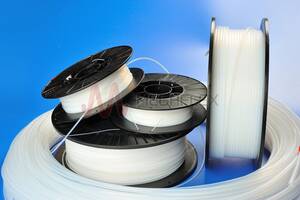
- Thin Wall (TW
- Light Wall (LW)
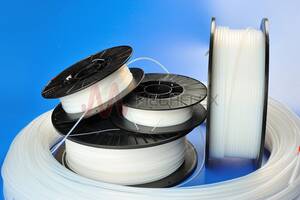
- Standard Wall (SW)
- ASTM D3295 Tubing: Group 01 Class 1 (Light Wall), Class 2 (Thin Wall), Class 3 (Standard Wall), and Class 5 (Heavy Wall) across standard AWG ratings.
- BS EN 60684-3-145: International specifications for non-heat-shrinkable PTFE sleeving across Sheet 145 thin-wall designations.
- Special Configurations: PVC-jacketed tubing (PTFE60DS
Which Profile Suits Your Project? For general chemical handling and standard industrial automation, Thin-Wall Industrial PTFE Tubing provides a practical balance of pressure capability, bend radius, and ease of fitting installation. For compact electronics and aerospace wire harnesses, select AMS Spaghetti Tubing matching your AWG wire gauge. If your lines face mechanical rubbing or external sparks, choose PVC-Sheathed PTFE (PTFE60DS
Final Thoughts

Flexible PTFE tubing remains a foundational material for high-reliability industrial fluid handling, precision laboratory analysis, and critical electrical insulation. Its high thermal stability up to 400°C without decomposition, near-universal chemical inertness, cryogenic flexibility, and compliant food-contact formulations make it an indispensable asset across modern industry. By correctly assessing sizing, chemical profiles, thermal loads, external environments, and fitting systems, you can ensure an efficient, leak-free, and dependable fluid transfer system. Need expert support? Our technical engineering team is here to assist. Contact us today at sales@megaflex.co.uk!
Check Out Our Other Blogs
Read our other technical articles and practical hose guides:
- Eolo PU Ducting: The Ultimate Solution for Food-Grade Material Transfer
- Conduits at Megaflex: Material Matters
- PolyAlu Tubing: Revolutionising Durability in Harsh Environments
- How to Calculate Bend Radius: A Comprehensive Guide
Visit our blog homepage for more insights!
PTFE Tubing Solutions FAQ
Have questions about selecting, specifying, or installing flexible PTFE tubing? Click any frequently asked question below to view the technical answer. Need further technical support? Reach out at sales@megaflex.co.uk!
Click a question to read the answer:
Paste-extruded virgin PTFE tubing exhibits a specific density of 2.18 g/cm³ (ASTM D 792), a tensile strength of 25 N/mm² (ASTM D 4895), an elongation at break of 300% (ASTM D 4895), a dielectric breakdown strength of 50 kV/mm at 0.5 mm wall thickness (ASTM D 149), and a volume resistivity of 10¹⁷ Ω · cm (ASTM D 257).
In static, unstressed conditions, the continuous upper working temperature limit is 250°C (482°F). Under dynamic conditions involving vibration, movement, or mechanical stress, the maximum continuous limit should be reduced to 200°C (392°F). PTFE does not experience appreciable thermal decomposition below 400°C.
At room temperature (20°C / 68°F), for tubing with a 1 mm wall thickness, the minimum bend radius is roughly 9 to 11 times the Outside Diameter (OD). As wall thickness decreases (such as in light-wall or thin-wall sleeving profiles), the minimum bend radius must be increased to avoid wall collapse and kinking.
Sharp bending can cause the tubing wall to collapse or ovalise before the system is even pressurised. This collapse severely restricts cross-sectional flow, impairs fluid dynamics, and introduces structural wall defects that can cause the tube to crack under cyclic pressure.
Yes. When complex configurations are required, PTFE tubing can be thermoformed by heating the tube, bending it to the required shape, and cooling it in place to set the geometry. Inserting a malleable metallic mandrel inside the bore prevents wall collapse during hot forming.
Standard thin-wall PTFE tubing tolerances are: for Inner Diameter (ID) < 5 mm, ±0.25 mm; for ID from 5 mm to < 25 mm, ±5%. For wall thickness < 1 mm, tolerance is ±0.1 mm; for wall thickness ≥ 1 mm, tolerance is ±10%.
PTFE is virtually inert against all commercial acids, bases, and solvents up to 300°C. It is only attacked by molten or elemental alkali metals (such as sodium and potassium), chlorine trifluoride (ClF₃), and elemental fluorine gas (F₂) at elevated temperatures and pressures. Certain fluorinated hydrocarbons may cause minor, fully reversible physical swelling.
Tubing must be kept in its original protective packaging to guard against particulate contamination. To prevent coil flattening or wall crushing from excessive weight, do not stack more than two to three layers of coils or bags on top of each other.
These designations reflect different wall thicknesses for aerospace and electrical sleeving: Standard Wall (SW per AMS 3653E) provides the heaviest wall and highest mechanical protection; Thin Wall (TW per AMS 3655B) offers intermediate thickness and weight; Light Wall (LW per AMS 3654C) provides the thinnest wall profile for maximum flexibility in weight-critical applications.
Working pressure is directly related to burst pressure, which decreases as operating temperature rises. Working pressure ratings are established at room temperature (20°C); as temperatures climb, working pressure must be de-rated by a predetermined factor—typically down to roughly 60% of rated capacity at 100°C and 35–40% at 200°C.