Paddock Cleaning Hose in 2026
Find the Perfect Hose for Paddock Cleaning!
Updated September 9, 2026
Product links mentioned in this blog:(EU01)Eolo PU Food Ducting
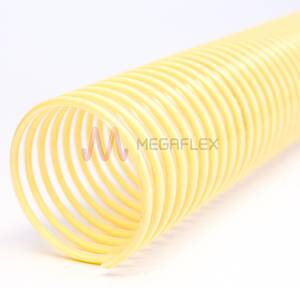
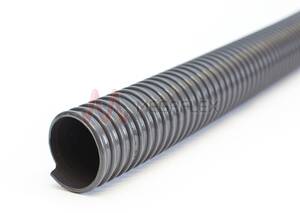
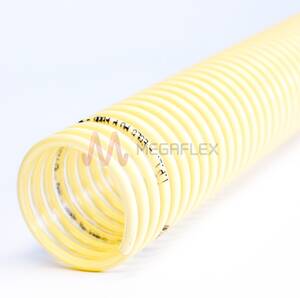
Paddock cleaning is essential for maintaining a healthy and safe environment for your horses, but choosing the right hose for the job can feel daunting with so many options available. From removing manure to leveling molehills, the right hose or ducting ensures efficiency, safety, and durability. This guide simplifies the process of selecting the ideal hose for paddock cleaning, helping you make an informed decision in minutes. Need assistance? Drop us an email at sales@megaflex.co.uk.
How do I know which hose to use for paddock cleaning?
Well, let’s dive in!
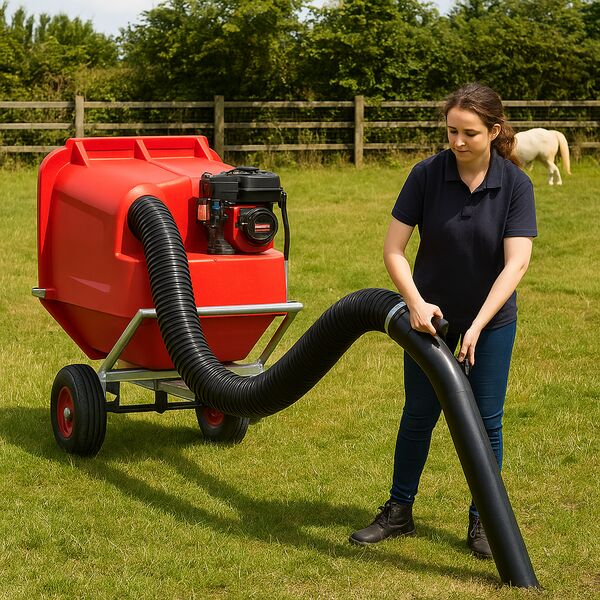
How to Select the Perfect Hose for Paddock Cleaning in 6 Steps
- 1. Determine the Hose Size. Select the appropriate internal diameter, length, and tolerances for optimal flow and compatibility. Check our product pages
- 2. Identify the Medium. Choose a hose material suitable for water, manure, or feed, ensuring compatibility with chemicals and temperature conditions.
- 3. Assess Usage Requirements. Match the ducts vacuum, and throughput capacity to your cleaning tasks.
- 4. Account for Environmental Factors. Consider exposure to sunlight, abrasion from paddock debris, and temperature extremes to ensure durability.
- 5. Consider Special Requirements. Evaluate weight, flexibility, or safety features like anti-static properties for stable environments.
- 6. Choose the Connection System. Select suitable clips and clamps to achieve a leak-free connection.
- Ready to pick your hose. Confidently select the perfect hose in minutes.
Why Invest in a Quality Hose for Paddock Cleaning?
Paddock maintenance goes beyond aesthetics—it’s about keeping your horses safe and healthy. Weeds, dead grass, molehills, and manure can pose serious risks if not managed properly. A quality hose is a critical tool for tasks like removing manure, or supporting paddock vacuum systems. The right hose saves time, ensures safety, and prevents costly failures.
You don’t need to be an expert to choose the perfect hose. Whether you’re a small-scale horse owner cleaning a paddock or a stable manager maintaining large fields, this guide simplifies the process.
Why proper paddock maintenance matters:
- Dead Grass: Dead grass encourages weed proliferation. Consistent removal using suction hoses helps maintain safe pastures and fosters healthy grass development.
- Molehills: Molehills are unattractive and may lead to colic if horses consume the soil. A vacuuming or levelling hose ensures a smooth, secure paddock surface.
- Manure Management: Horse droppings can harbour parasites, draw in pests, and pollute water supplies. A suction hose, used to remove manure enhances hygiene and soil condition.
- Save Time and Money: A durable hose prevents leaks or bursts, reducing downtime and replacement costs. UV-resistant hoses last longer in outdoor paddocks.
- Ensure Safety: Incorrect ductings can leak or burst, risking contamination or injury. A ducting with proper vacuum and chemical ratings keeps you and your horses safe.
- Boost Efficiency: The right ducting size ensures optimal flow for suction, saving time and resources.
- Customise Your Setup: Choose hoses or ductings with anti-static features for dusty stables or clear designs for monitoring flow, tailoring your cleaning process.
Why a quality hose matters:
Investing in the right hose means less worry about equipment failures and more focus on maintaining a healthy paddock.
Ready to find your hose? Check our step-by-step guide or email sales@megaflex.co.uk for expert advice!
Selecting the right agricultural hose ensures tailored performance for specific tasks, such as using abrasion-resistant models for manure suction, while prioritising safety to prevent leaks or bursts that could lead to contamination or accidents. Properly rated, UV- and abrasion-resistant hoses withstand harsh outdoor conditions, enhancing longevity and reducing replacement costs, so you can maintain your paddock with confidence, free from equipment failures. For more information, contact sales@megaflex.co.uk
Step-by-Step Guide to Selecting the Right Hose for Paddock Cleaning
Step 1: Determine the Hose Size
Hose size is critical for performance in paddock cleaning. Consider:
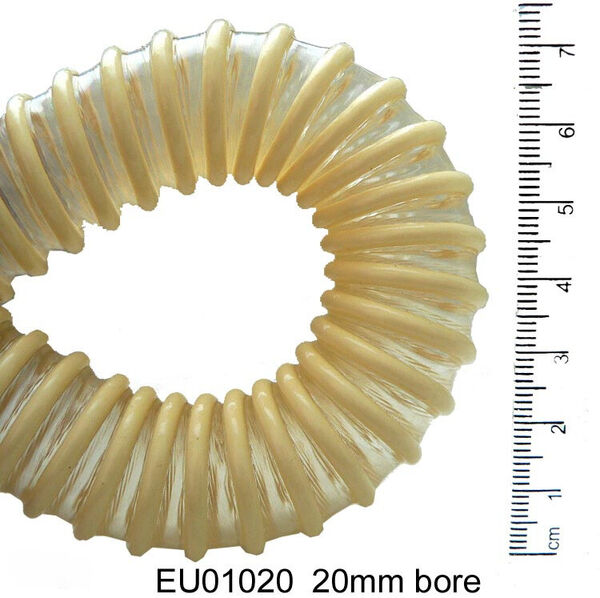
- Inside Diameter (ID): Determines flow capacity.
- Outside Diameter (OD): Ensure compatibility with clips, couplings or clamps.
- Length: Measure the distance needed, accounting for curves around paddock obstacles. Avoid overly long hoses to prevent vacuum loss.
- Tolerance: Verify industry standards for compatibility and safety.
Tip: For high-flow tasks like cleaning large paddocks, choose a larger ID but ensure your system handles the vacuum drop.
Step 2: Identify the Substances or Mediums to Be Carried
The substances you’re handling dictate the hose material. For paddock cleaning:
Choose a hose based on the materials handled. For vacuum systems collecting dry feed, manure, granules, hedge clippings, grass cuttings, or twigs, use abrasion-resistant PU or PVC ducting. For gravel, opt for heavier hoses. Liquids like water or disinfectants need corrosion-resistant linings; gases require gas-impermeable hoses. Ideal as a Terra Vac replacement for pasture recovery, clearing blockages, or collecting alpaca/horse manure.
Ensure chemical compatibility, temperature tolerance (up to 90°C or cold conditions), and sufficient wall thickness for particle sizes. Check manufacturer charts and test hoses with your materials to prevent degradation.
Step 3: Assess Usage Requirements
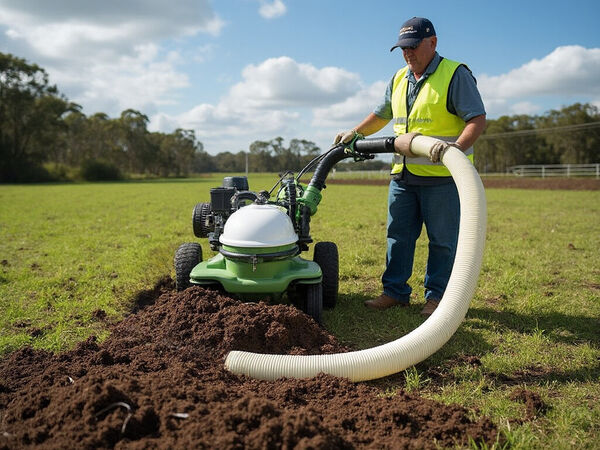
How the hose is used affects its durability. Consider:
- Vacuum Resistance: For manure or slurry suction, choose ductings or hoses with a rigid helix to prevent collapse such as Eolo PU Food Ducting
- Intensity: Light hoses suit occasional rinsing; heavy-duty hoses or ductings are needed for daily vacuuming.
- Throughput Capacity: Ensure the ID supports the required flow rate for efficient cleaning.
Step 4: Account for External Environmental Factors
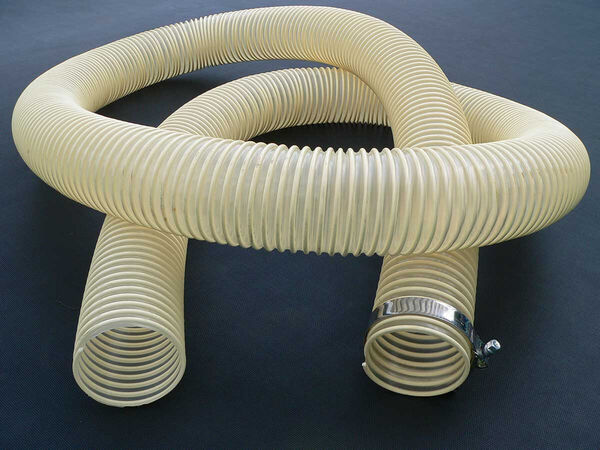
Paddock and stable environments can wear down hoses. Evaluate:
Sunlight and Weather
PU and PVC hoses resist UV damage in paddocks, preventing cracking. PU offers superior flexibility and durability in extreme weather, ideal for harsh sun or wet winters. PVC is more cost-effective but less resilient to prolonged UV exposure.
Mechanical Wear
Abrasive debris like manure, granules, or twigs requires abrasion-resistant hoses for vacuum systems. PU excels with high resistance to wear from coarse solids. PVC is less durable, better for lighter tasks; heavier hoses are recommended for gravel.
Ambient Temperature
PU hoses handle a wide temperature range (-20°C to 90°C), staying flexible in hot or freezing conditions, perfect for manure collection. PVC is less adaptable to extreme cold, risking brittleness, but suitable for moderate climates.
Step 5: Consider Special Requirements
Paddock cleaning may require unique features:
- Weight - PU hoses are lightweight, ideal for portability in small paddocks, while PVC can be heavier, better suited for stationary setups in larger areas.
- Flexibility - PU offers superior flexibility, perfect for navigating tight stable spaces or around obstacles. PVC is less flexible but adequate for straighter runs in paddock cleaning.
- Bending Radius - PU has a tighter minimum bend radius, reducing kinking in complex setups. PVC requires a larger bend radius, making it less ideal for tight turns.
- Torsion - PU hoses are highly torsion-resistant, preventing damage from twisting during use. PVC is more prone to stress under torsion, requiring careful handling.
- Electrical Resistance - PU anti-static hoses excel in dusty stables, reducing spark risks from dry feed or hay. PVC may need specific anti-static additives for similar safety.
- Colour - Both PU and PVC offer clear or translucent options to monitor flow of manure or granules, with PU often providing better clarity for easier inspection.
Tip
Prioritise PU anti-static hoses in dusty or hay-filled environments to enhance safety during paddock cleaning.
Step 6: Choose the Connection System
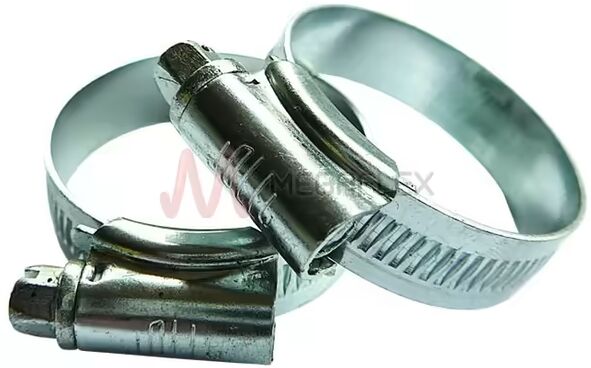
Secure connections prevent leaks:
- Clamps: Match clamps to the hose’s OD and pressure rating. Worm Drive Clips are recommended for Eolo PU Food
Why Choosing the Right Hose Matters for Paddock Cleaning
A mismatched hose can lead to:
- Material Degradation: Incompatible materials cause leaks or contamination.
- Pressure Failures: Exceeding ratings risks bursts, endangering workers or horses.
- Environmental Damage: UV or abrasion shortens hose life.
- Inefficiency: Poor sizing slows cleaning tasks.
By evaluating size, substances, usage, environment, special requirements, and connections, you’ll find a reliable, long-lasting duct.
Ready to Choose Your Hose?
Follow these steps:
- List Requirements:
Note substances, pressure, environment, and special needs. - Check Specs:
Use supplier catalogs to match your needs. - Seek Expert Advice:
Contact us for recommendations. - Test Samples:
Verify compatibility for critical tasks.
The Best Hose Options for Paddock Cleaning
Paddock cleaning requires hoses or ductings that handle manure suction, and debris removal while resisting abrasion, microbes, and outdoor conditions. Two top options are the Eolo PU Food Ether Polyurethane Ducting (EU01) and the Eolo L PVC Dark Grey PVC Ducting (EL01). Here’s a comparison:
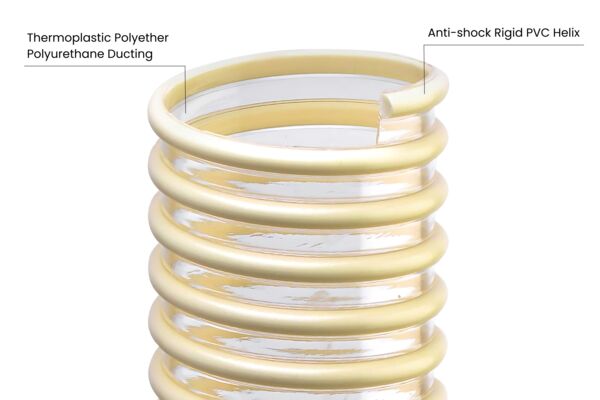
Ideal for suction of dry feed, manure, granules, hedge clippings, grass cuttings, twigs and general grounds maintenance, but heavier alternatives such as Eolo PUP Ducting
- Food Quality: FDA 21 CFR 177.2600 (dry foods), EU 10/2011 (dry, acidic, alcohol up to 20%, fatty foods).
- Temperature: -40°C to 90°C (intermittent to 125°C).
- Suitable Media: Manure, feed, powders, granules.
- Applications: Paddock vacuums, feed transfer, stable cleaning.
- Key Sizes:
| Part | Inner Diameter (mm) | Outer Diameter (mm) | Wall Thickness (mm) | Vacuum Rating (mH₂O) | Bend Radius (mm) | Weight (g/m) | Length (m) | Volume (m³) | Availability |
|---|---|---|---|---|---|---|---|---|---|
| EU01076 | 76.2 | 84.6 | 0.6 | 1.6 | 100 | 640 | 30 | 0.365 | Good |
| EU01102 | 102 | 112 | 0.6 | 1.3 | 140 | 870 | 30 | 0.643 | Good |
| EU01152 | 152 | 164 | 0.7 | 0.8 | 200 | 1610 | 20 | 0.945 | Good |
| EU01203 | 203 | 218 | 0.7 | 0.4 | 260 | 2410 | 20 | 1.67 | Production |
| EU01250 | 250 | 266 | 0.8 | 0.4 | 300 | 3570 | 10 | 1.36 | Good |
| EU01305 | 305 | 321 | 0.8 | 0.3 | 350 | 4520 | 10 | 1.64 | Production |
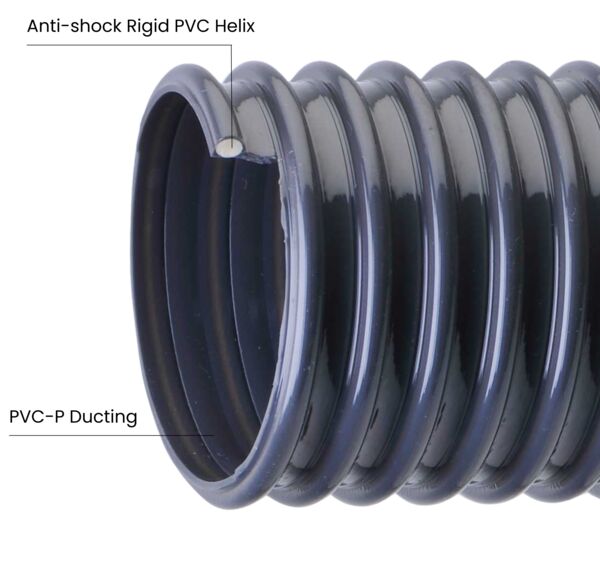
Designed for ventilation and dust suction, this hose suits dry paddock cleaning tasks. Its rigid PVC spiral and thicker walls (0.8–1.2mm) provide durability against weathering, chemicals, and UV rays. An antistatic version (EL02) is available.
- Temperature: -10°C to 50°C.
- Suitable Media: Dust, sawdust, twigs, leaves, manure, shavings, air.
- Applications: Stable ventilation, debris suction.
- Key Sizes:
| Part | Inner Diameter (mm) | Outer Diameter (mm) | Wall Thickness (mm) | Vacuum Rating (mH₂O) | Bend Radius (mm) | Weight (g/m) | Length (m) | Volume (m³) | Availability |
|---|---|---|---|---|---|---|---|---|---|
| EL01076 | 76.2 | 84.2 | 1 | 1.5 | 100 | 660 | 50 | 0.606 | Good |
| EL01102 | 102 | 112 | 1 | 1.3 | 130 | 1020 | 30 | 0.644 | Good |
| EL01152 | 152 | 164 | 1.1 | 0.8 | 180 | 1700 | 20 | 0.942 | Production |
| EL01203 | 203 | 216 | 1.1 | 0.4 | 230 | 2310 | 20 | 1.66 | Production |
| EL01250 | 250 | 265 | 1.2 | 0.4 | 270 | 3390 | 10 | 1.35 | Good |
| EL01300 | 300 | 315 | 1.2 | 0.3 | 300 | 4140 | 10 | 1.61 | Good |
Which is Best? The Eolo PU Hose (EU01) is the top choice for paddock cleaning due to its wide temperature range, food-grade certification, and superior abrasion resistance, making it ideal for manure suction and feed transfer. The Eolo L PVC (EL01) is a cost-effective option for dry tasks like dust or debris suction but is less versatile for hot water or wet conditions. Email sales@megaflex.co.uk for personalised guidance.
Final Thoughts

Proper paddock maintenance—removing weeds, leveling molehills, managing manure, and overseeding—keeps your horses safe and your pastures healthy. A quality hose or ducting is key to these tasks, and by following our guide on size, substances, usage, environment, special requirements, and connections, you’ll find a reliable solution. Whether you’re a hobbyist or a professional, we’re here to help. Contact us at sales@megaflex.co.uk!
Check Out Our Other Blogs
Dive deeper into hoses and paddock maintenance with our expert insights:
- Eolo PU Ducting: The Ultimate Solution for Food-Grade Material Transfer
- Conduits at Megaflex: Material Matters
- PolyAlu Tubing: Revolutionising Durability in Harsh Environments
- How to Calculate Bend Radius: A Comprehensive Guide
Visit our blog homepage for more!
Hose Solutions FAQ
Got questions about selecting the perfect hose for paddock cleaning? Click a question to reveal the answer. Need more help? email us!
Click a question to read the answer:
Consider size (ID/OD, length), substances (water, manure, feed), usage (vacuum), environment (UV, abrasion), special requirements (flexibility, anti-static), and connections.
Identify the substance, concentration, and temperature. Use manufacturer compatibility charts or test a sample to prevent degradation.
A hose is typically a flexible tube designed to transport liquids, gases, or light solids under pressure or vacuum, often reinforced for durability. Ducting, usually made from PU or PVC, is more rigid, lightweight, and optimised for vacuum systems, ideal for suctioning solids like manure, granules, or clippings in paddock cleaning.
Use UV- and ozone-resistant hoses (e.g., PU, PVC) to prevent cracking. Store in shaded areas to extend lifespan.
Kinking occurs if the bend radius is too tight or reinforcement is insufficient. Choose flexible hoses with a suitable bend radius.
Yes, in dusty stables with hay, anti-static hoses prevent sparks in flammable environments.
Inspect for cracks or leaks. Heavy-duty hoses last years; lightweight hoses may need replacement every 1–3 years based on usage and storage.
Use clamps or clips that fit the hose’s OD and vacuum rating. We recommend Worm Drive Clips.
For hot water cleaning (up to 90°C), use PU or silicone hoses or ducts with appropriate temperature ratings.
Measure the distance between connection points, adding extra for curves. Avoid overly long hoses to minimise pressure loss.
Vacuum-resistant hoses with helix reinforcement prevent collapse during suction tasks such as poo, slurry or manure removal.
Use abrasion-resistant hoses or add protective sleeves in high-wear environments like paddocks with gravel or debris.