Ductings & Hoses in the Oil & Gas Industry: ATEX, Petrochemical and More
Updated September 28, 2026
Guide to Ductings & Hoses in the Oil & Natural Gas Industry
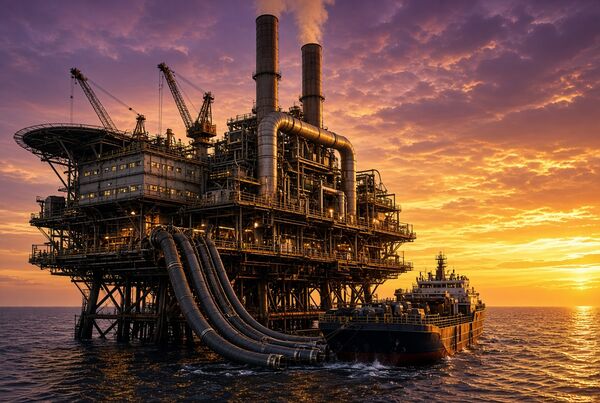
In upstream exploration, offshore drilling platforms, Floating Production Storage and Offloading (FPSO) vessels, and downstream petrochemical refineries, fluid and air handling systems operate under some of the most aggressive conditions on earth. Facilities must safely manage toxic hydrogen sulphide (H2S sour gas), volatile hydrocarbon fumes, high-pressure diesel bunkering, corrosive saline marine atmospheres, and extreme thermal loads ranging from cryogenic LNG transfer to gas turbine exhaust temperatures exceeding +1000°C. Specifying non-compliant, uncertified, or generic ductings and hoses can lead to catastrophic static spark discharges in ATEX-classified explosive zones, chemical permeation, offshore deluge failures, or uncontrolled flare gas leaks. This comprehensive guide examines how to specify, ground, and maintain flexible ductings, fuel lines, chemical hoses, and emergency offshore deluge assemblies across the oil and gas sector. Need project-specific technical advice or material test certificates? Contact our team at sales@megaflex.co.uk.
Which ducting or hose is required for gas turbine exhausts, offshore engine rooms, sour gas sampling, or hazardous ATEX zones?
Well, let’s dive in!
How to Select the Perfect Oil & Gas Hose and Ducting in 6 Steps
- 1. Determine Fluid Dynamics, Working Pressure & Negative Vacuum. Evaluate internal bore sizing, flow rates, and whether you require low-pressure air extraction, full vacuum bunkering (0.9 bar), or high-pressure fuel delivery (10 to 16 bar).
- 2. Match Chemical Composition & Hydrocarbon Resistance. Select liner polymers resistant to diesel, crude oil, aromatic hydrocarbons (up to 50% aromatic content), aggressive drilling muds, or sour gas containing H2S.
- 3. Assess Thermal Extremes & Radiant Engine Heat. Factor in extreme operating temperatures, from sub-zero North Sea conditions (-40°C) to silicone and Kapton® ducting (+250°C to +400°C) and gas turbine exhausts up to +1100°C.
- 4. Mitigate Combustible Gas & Dust Hazards (ATEX & DSEAR). Prevent static ignition in explosive atmospheres (Zones 0, 1, and 2) by complying with TRGS 727, EN 12115, and ISO 8031 conductivity standards (R< 106 Ω).
- 5. Account for Marine Corrosion, Offshore Deluge & Flame Safety. Specify ozone-, UV-, and saltwater-resistant synthetic covers, and verify fire safety compliance under SOLAS, ISO 15540, and DIN 4102-B1.
- 6. Select Heavy-Duty Industrial Couplings & Mechanical Clamps. Ensure total structural integrity and electrical bonding with EN 14420-7 Camlocks, DIN 2817 bolted safety clamps, and interlocking spiral bridge clamps.
- Ready to pick your oil & gas hose. Explore our application matrix and technical specification tables.
Why Invest in Dedicated Oil & Gas Ductings & Hoses?
Offshore rigs and oil refineries are high-consequence environments governed by stringent UK DSEAR (Dangerous Substances and Explosive Atmospheres Regulations) and European ATEX 2014/34/EU directives. An unexpected hose failure does not merely cause localised maintenance downtime; it risks unconfined hydrocarbon vapour cloud explosions (UVCE), environmental oil spills into marine ecosystems, or severe crew injuries from high-pressure line whipping. High-specification, certified hoses and ductings maintain zero hydrocarbon permeation, withstand severe offshore weather, and ensure uninterrupted safety.
The Operational Challenges of Petrochemical & Offshore Fluid Transfer:
- Extreme Flammability & Static Ignition: Pumping diesel, aviation kerosene, or crude oil at high velocity through non-conductive pipes builds massive electrostatic charges via triboelectric friction. Hoses must have an electrical resistance of R< 106 Ω or integrated copper bonding wires to safely ground potentials before an ignition spark can form.
- Corrosive Sour Gas & Aromatic Attack: Crude oil streams frequently contain high concentrations of hydrogen sulphide (sour service). Standard nitriles or EPDM rubbers swell, blister, and crack when exposed to aromatic solvents and H2S. Specialised fluoroelastomers like Industrial Viton® FKM
- Offshore Environmental Stresses: Salt spray, ultraviolet radiation, sea water immersion, and constant wave action destroy generic plastics. Hoses require heavy-duty chloroprene (neoprene) or compounded synthetic covers to resist environmental degradation.
- Thermal Radiation from Flaring & Turbines: Offshore power generation relies on heavy-duty diesel and natural gas turbines. Extracting hot exhaust gases and cooling air demands specialised composite ductings capable of surviving temperatures between +250°C and +1100°C without shedding molten droplets.
The Value of Certified Engineering Fluid Assemblies:
- Safety Factor Ratios (3:1 and 4:1): Oil delivery and suction lines manufactured to EN 12115 or international bunkering standards possess burst pressure safety margins four times their working pressure, containing sudden pressure surges during pump shut-off.
- Emergency Fire Protection: Specifying certified deluge lines like the Red Vulcano Fire Deluge Hose

- Full Material Traceability: Complete batch documentation and conformity certificates satisfy safety audits by the Health and Safety Executive (HSE) and classification societies like DNV, Lloyd’s Register, and Bureau Veritas.
Ready to configure your oil and gas transfer lines? Review our step-by-step selection guide or contact our technical engineers at sales@megaflex.co.uk.
Step-by-Step Guide to Selecting Oil & Gas Ductings & Hoses
Step 1: Determine Fluid Dynamics, Working Pressure & Negative Vacuum
Matching hose mechanical construction to operating pressure prevents dangerous line ruptures or flow choking:
- Low-Pressure Air, Vapour & Fume Extraction: Ventilation, hazardous air extraction, and hot exhaust ductings operate under low positive pressure or light negative pressure. Single-ply ductings like Master-Sil 1


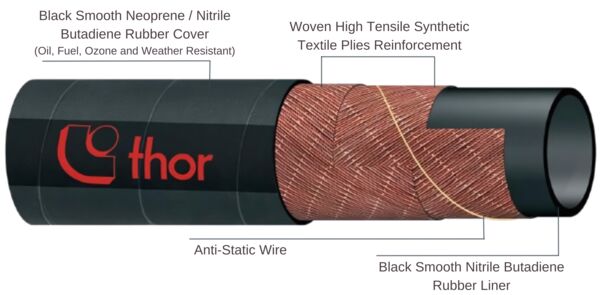
- High-Pressure Hydrocarbon Delivery: Bunkering and fuel transfer circuits require reinforced elastomeric carcasses. The Diesel & Fuel Oil Delivery Hose


- Full Vacuum Hydrocarbon Suction: When pumping heavy crude, drilling muds, or bunkering fuel oil from supply ships to offshore platforms, pump inlet suction forces standard delivery hoses to collapse. The Heavy-Duty Oil Suction & Delivery Hose

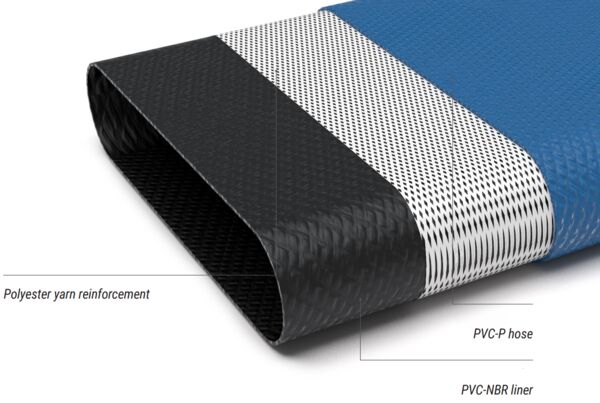
- High-Volume Seawater Deluge & Ballast Discharge: For non-hydrocarbon utility runs, deballasting, and firefighting, layflat hoses provide massive volume throughput. The Blue Layflat 4 Bar Mercurio M Hose

Step 2: Match Chemical Composition & Hydrocarbon Resistance
Petrochemical media degrade general-purpose polymers rapidly. Sizing the correct inner tube formulation is vital:
Refined Fuels, Diesel & Lubricating Oils
Refined distillates contain aggressive aromatic compounds (benzene, toluene, xylene). Hoses such as the Diesel Oil Delivery Hose
Corrosive Sour Crude, H2S & Analytical Gas Sampling
Upstream natural gas extraction frequently contains hydrogen sulphide (H2S), carbon dioxide (CO2), and aggressive amine sweetening agents. These chemicals break down standard elastomers:
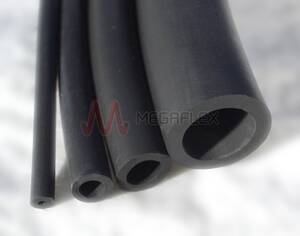
- Industrial Viton® FKM Flexible Tube
- Fluorosilicone Hydrocarbon-Resistant Fuel Hose

- UHMWPE Multipurpose Green Chemical Hose

Corrosive Vapours & Aggressive Petrochemical Flues
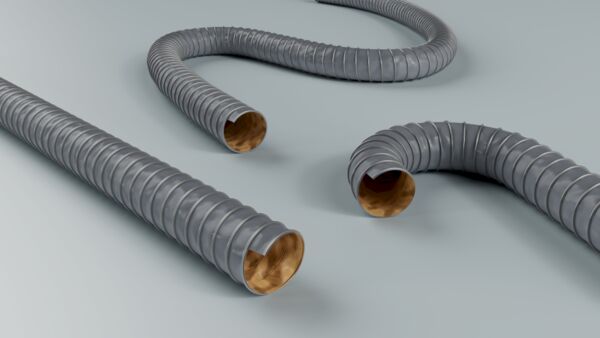
When venting volatile organic compounds (VOCs) and hot acid fumes from cracking towers or laboratory analysis skids, the CP Kapton® 476 High-Temperature Ducting
Step 3: Assess Thermal Extremes & Radiant Engine Heat
Temperature fluctuations in the oil and gas sector are among the most severe in modern industry:
- Sub-Zero Arctic & North Sea Bunkering: Conventional plastic hoses become glass-brittle and shatter when flexed at sub-zero temperatures. High-grade NBR fuel hoses and silicone ductings remain fully flexible at temperatures down to -35°C to -70°C.
- Engine Room & Turbine Ventilation (+125°C to +250°C): Auxiliary diesel generators and offshore turbine enclosures generate continuous radiant heat. Single-ply Master-Neo 1
- Extreme Flare Gas & Turbine Exhausts (Up to +1100°C): Gas turbine exhaust stacks, flare gas diverters, and industrial furnaces exceed the thermal boundaries of all standard elastomers. The Master-Clip HT 1100° Ducting

- Cryogenic Processing to Ultra-High Heat (-260°C to +400°C): For specialised process gas monitoring and extreme thermal cycling, CP Kapton® 476
Step 4: Mitigate Combustible Gas & Dust Hazards (ATEX & DSEAR)
Preventing electrostatic discharge is a legal obligation under European ATEX Directive 2014/34/EU and UK DSEAR regulations:
Petrochemical media possess exceptionally low Minimum Ignition Energy (MIE) thresholds—often less than 0.2 milliJoules for volatile hydrocarbon vapours. A spark barely visible to the human eye can ignite an unconfined vapor cloud. Hoses deployed in hazardous classifications must comply with BS EN ISO 8031 and German TRGS 727:
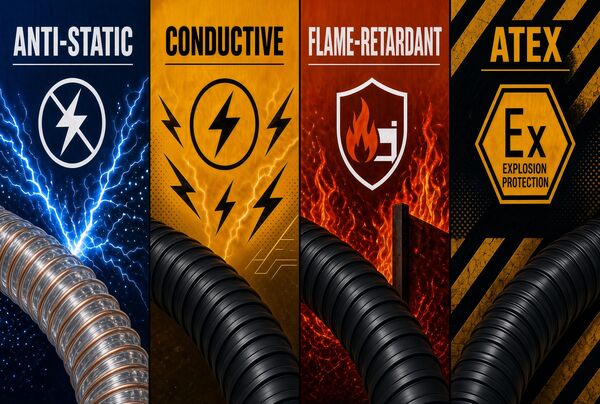
Electrical Conductivity Classes in Oil & Gas Transfer:
- Electrically Conductive Hoses (Type Ω): Hoses manufactured with conductive rubber compounds throughout the inner tube and outer cover, delivering continuous resistance of R< 106 Ω. This allows static electricity to flow safely to earth through connected metal couplings, making them certified for ATEX Zones 0, 1, and 2.
- Metallic Cross-Bonded Hoses (Type M): Bunkering hoses incorporate twin low-resistance brass or copper bonding wires braided into the textile plies. These wires are uncoiled and soldered or mechanically clamped to end couplings, maintaining an end-to-end resistance of R ≤ 102 Ω/m.
Step 5: Account for Marine Corrosion, Offshore Deluge & Flame Safety
External platform environments demand high resilience against physical elements and open fires:
Saline Atmosphere & Ozone Cracking
Ocean environments present severe oxidative stress. Marine salt encrustation accelerates electrolytic galvanic corrosion, while marine ozone cracks unstabilised rubbers. Neoprene ductings (M479
Offshore Fire Deluge & Emergency Seawater Systems
During an offshore fire emergency, sprinkler and water cannon deluge networks must operate under intense thermal radiation. The Red Vulcano Fire Deluge Hose
Step 6: Select Heavy-Duty Industrial Couplings & Mechanical Clamps
The structural safety of an oil and gas transfer line depends directly on its end terminations:
- Camlock Couplings (BS EN 14420-7 / A-A-59326): The global standard for quick-release fuel and bunkering transfer. In oil and gas service, Camlock bodies must be cast from 316 stainless steel, brass, or specialised aluminium bronze to eliminate mechanical sparking hazards. Couplings must feature locking safety arms and fuel-resistant Viton® or NBR sealing gaskets.
- Bolted Safety Clamps (BS EN 14420-3 / DIN 2817): Never use worm-drive clips on pressurised fuel or oil delivery lines. High-pressure bunkering and petrochemical lines demand two-piece drop-forged aluminium or stainless steel bolted safety clamps with internal rim collars that interlock with the hose fitting shank, preventing coupling blowout even under hydraulic pressure surges.
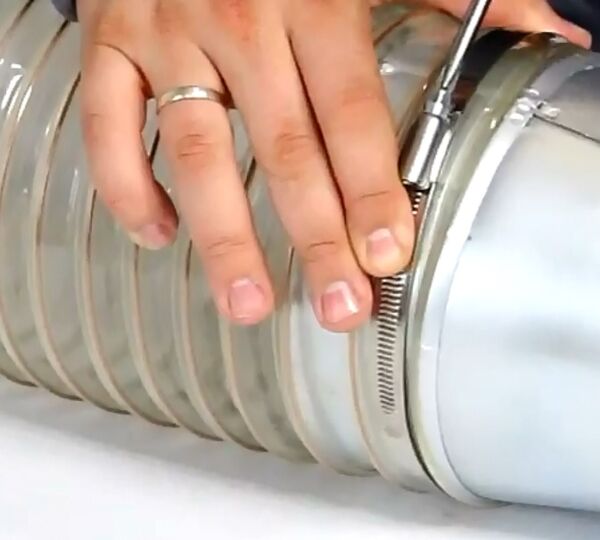
- Heavy-Duty Bridge Clamps for Spiral Ductings: Corrugated silicone and neoprene ductings cannot be sealed with flat hose clips. Bridge Clamps feature an engineered arch that bridges cleanly over the external spring steel wire helix, applying uniform radial compression around the underlying fabric cuff to prevent exhaust fumes from leaking into control rooms.
- Flanged Marine Terminations: For large-diameter oil suction and bunkering (typically 3" to 8" ID), hoses are fitted with fixed or swivel ASA / ANSI 150 lb or EN 1092-1 PN16 flanges, swaged with heavy-duty interlocking steel ferrules.
Why Choosing the Right Oil & Gas Hose Matters
Specifying generic or non-certified hoses in petrochemical operations can cause catastrophic failures:
- Ignition of Flammable Vapour Clouds: Ungrounded hoses allow static charges to arc across couplings, igniting volatile Class I hydrocarbon fumes.
- Catastrophic Coupling Blowout: Using worm-drive clips instead of DIN 2817 safety clamps can cause high-pressure fuel lines to blow off their fittings, spraying diesel or hot crude across engine bays.
- Toxic H2S Permeation: Standard elastomeric liners allow deadly hydrogen sulphide gas to permeate through the hose wall into enclosed offshore workspaces.
- Duct Melting in Turbine Bays: Installing standard PVC or low-grade rubber ducting in engine exhaust bays causes walls to melt and ignite, filling control rooms with toxic black smoke.
Ready to Choose Your Oil & Gas Hose or Ducting?
Follow this checklist when specifying equipment for your platform or refinery:
- Identify Conveyed Media: Confirm whether the line will carry crude oil, diesel, aviation fuel, toxic sour gas, high-temperature exhaust, or deluge seawater.
- Check Working & Surge Pressures: Ensure bunkering lines maintain a 4:1 safety factor under positive pressure and check for embedded steel helices for vacuum suction.
- Map the ATEX Zone: Confirm Zone 0, 1, or 2 requirements and verify that electrical resistance to earth is R< 106 Ω or cross-bonded with copper wires.
- Assess Temperature Boundaries: Select neoprene up to +125°C, silicone up to +250°C, Kapton® up to +400°C, or extreme Master-Clip up to +1100°C.
- Select Certified End Couplings: Match hoses with spark-resistant EN 14420-7 Camlocks or EN 14420-3 safety bolted clamps.
Top Picks for Oil & Gas Applications
To assist your engineering specifications, our hoses and ductings are categorised below by operational duty:
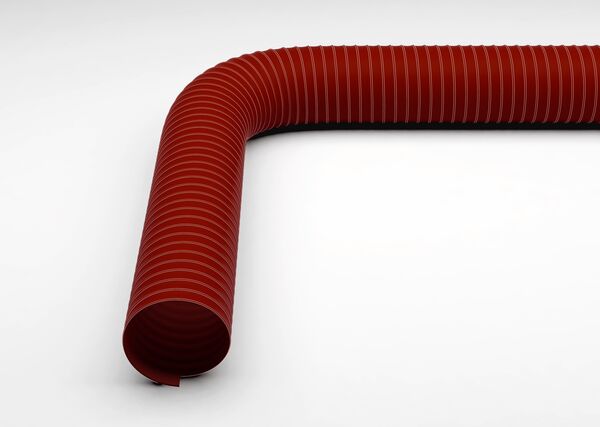
The Master-Sil 2 Double-Ply Silicone Ducting
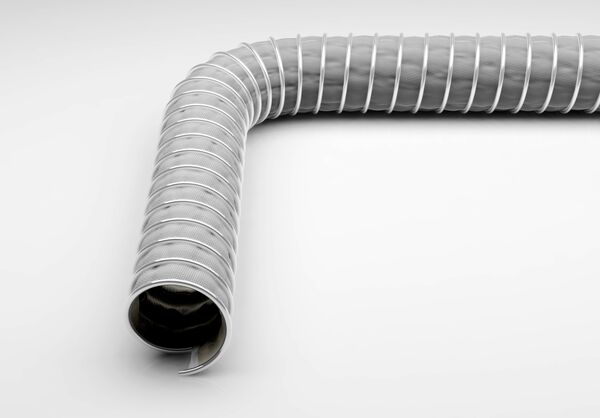
Where temperatures exceed the limits of silicone, the Master-Clip HT 1100° Ducting
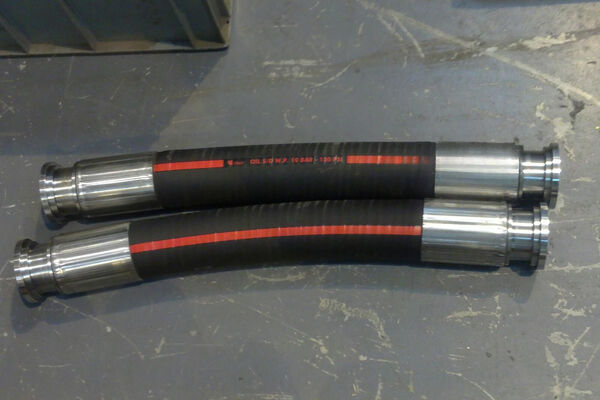
For ship-to-shore transfer, rig bunkering, and dockside offloading of crude oil and refined petroleum, the Heavy-Duty Oil Suction & Delivery Hose
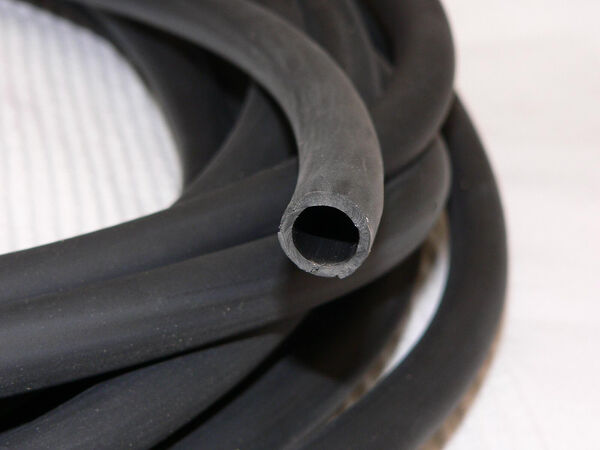
Managing corrosive sour crude, hydrogen sulphide (H2S), and high-aromatic fuel sampling requires elite fluoroelastomers. The Industrial Viton® FKM Flexible Tube
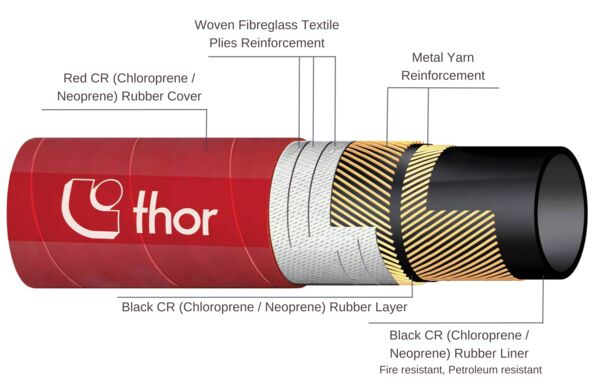
Offshore emergency response demands dependable fire deluge equipment. The Red Vulcano Fire Deluge Hose
Oil & Gas Hose & Ducting Technical Specifications
The table below provides technical data for our primary oil, gas, and petrochemical transfer lines:
| Product Model | Material Construction | Temperature Range | Working Pressure / Vacuum | Standards & Electrical Safety | Primary Oil & Gas Application |
|---|---|---|---|---|---|
| Master-Sil 2 (M495) | Double-ply silicone-coated glass fabric + embedded spring steel wire helix + external fibreglass cord | -70°C to +250°C (short-term to +300°C) | 0.3 to 2.5 Bar Vacuum: 0.08 to 0.7 Bar | Non-ATEX (Electrically insulative wall; groundable spiral wire) | Turbine hot air extraction, generator exhaust ventilation, engine bay cooling ducts |
| Master-Neo 2 (M485) | Double-ply chloroprene (neoprene) coated glass fabric + embedded spring steel wire helix | -35°C to +125°C (short-term to +150°C) | 0.3 to 2.8 Bar Vacuum: 0.08 to 0.5 Bar | Non-ATEX (Oil/ozone resistant wall; groundable spiral wire) | Diesel exhaust extraction, engine room ventilation, oily air intake in marine/offshore plant |
| Master-Clip HT 1100° (M319) | Multi-layer high-temp thermal fabric + stainless steel wire mesh inner layer + external stainless steel clamp clip | -20°C to +1100°C (with min. 50% fresh air) | 0.01 to 0.3 Bar (Exhaust ducting pressure) | Non-combustible technical ceramic/wire structure; non-ATEX | Gas turbine exhaust stacks, flare gas diverters, high-temperature industrial furnace flues |
| CP Kapton® 476 (476-0000) | DuPont™ Kapton® polyimide-coated glass fabric + external galvanised/stainless steel clamp clip | -260°C to +400°C | Low pressure / chemical exhaust | High chemical/radiation resistance; groundable external clip; non-ATEX | Corrosive chemical vapour extraction, cryogenic gas transfer, aggressive refinery flue sampling |
| Oil S&D Hose (T6702) | Black smooth NBR tube + high-tensile textile plies + embedded steel wire helix + conductive cover | -20°C to +70°C | 10 Bar working (30 Bar burst) Vacuum: 0.8 Bar (80%) | Flame resistant to TRbF 131 Teil 2 § 5.5; Conductive cover (R ≤ 106 Ω) | Rig bunkering, suction & delivery of petroleum fuels and crude oil with up to 50% aromatic content |
| Diesel Delivery (T174) | Black smooth synthetic NBR/SBR tube + high-tensile synthetic textile plies + weather/oil-resistant cover | -20°C to +80°C | 20 Bar working (60 Bar burst) Delivery only | Integrated copper antistatic bonding wire (R ≤ 102 Ω/m) | High-pressure platform diesel delivery, generator fuel supply, petroleum transfer up to 50% aromatics |
| Industrial Viton® (VIT) | 100% Genuine Viton® FKM Fluoroelastomer (70° Shore A, smooth wall, non-peristaltic grade) | -20°C to +200°C | Unreinforced tubing (Medium pressure fluid transfer) | Certified to BS 2848; zero hydrocarbon permeation; non-ATEX | Sour crude, toxic H2S gas sampling lines, flare header monitoring, chemical injection manifolds |
| Red Vulcano Deluge (VFDH) | High-tenacity circular woven polyester jacket + red oil- and weather-resistant synthetic elastomer cover/tube | -20°C to +80°C | 15 to 20 Bar working (size dependent) | Oil rig fire-resistant; flame, weather, and seawater resistant | Offshore platform fire deluge systems, emergency seawater pumping, rig washdown |
Summary Recommendation: For turbine and hot engine exhaust, specify **Master-Sil 2 (M495)** or **Master-Clip HT 1100° (M319)** depending on thermal load. For high-volume bunkering and oil suction, choose the steel-reinforced **Oil S&D Hose (T6702)**. For toxic sour gas analysis, strictly install **Industrial Viton® (VIT)**. For emergency offshore rig protection, deploy the **Red Vulcano Fire Deluge Hose (VFDH)**. Need assistance sizing line diameters or verifying compliance? Contact our technical desk at sales@megaflex.co.uk.
Final Thoughts
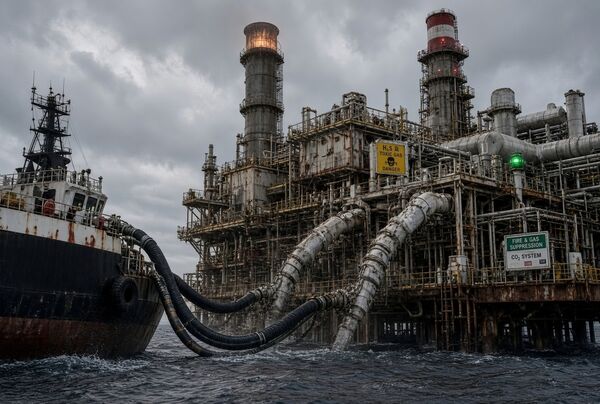
Maintaining safety, mechanical integrity, and environmental compliance across the oil and natural gas sector requires specialised fluid transfer assemblies. Pairing high-temperature silicone and Kapton® ductings, chemical-resistant Viton® tubing, and heavy-duty steel-reinforced NBR bunkering hoses with spark-resistant 316 stainless steel Camlocks and DIN 2817 safety clamps ensures absolute protection against static fires, volatile gas leaks, and offshore line failures. By analyzing your media chemistry, thermal limits, working pressures, and ATEX zoning, you protect your crew, preserve your assets, and prevent environmental contamination. Megaflex supplies a comprehensive portfolio of fully certified oil, gas, and petrochemical hoses, custom-assembled and tested to international standards. Contact our technical team today at sales@megaflex.co.uk!
Check Out Our Other Blogs
Explore our other technical articles and practical engineering guides:
- Eolo PU Ducting: The Ultimate Solution for Food-Grade Material Transfer
- Conduits at Megaflex: Material Matters
- PolyAlu Tubing: Revolutionising Durability in Harsh Environments
- How to Calculate Bend Radius: A Comprehensive Guide
Visit our blog homepage for more industrial insights!
Oil & Gas Ductings & Hoses FAQ
Have questions about selecting, maintaining, or grounding fluid lines and ducting for petrochemical and offshore installations? Click any question below to see the answer. For custom assemblies and engineering support, contact our team at sales@megaflex.co.uk!
Click a question to read the answer:
Standard industrial PVC and silicone ductings lack hydrocarbon permeation barriers, flame retardance certifications, and static grounding. When exposed to aromatic fuel vapours, standard PVC swells, leaches plasticisers, and becomes brittle. In addition, ungrounded PVC accumulates static electricity that can discharge in ATEX-classified zones, presenting an immediate ignition hazard.
Hydrogen sulphide (H2S) is a deadly, highly corrosive gas that rapidly embrittles standard nitriles and rubbers. Industrial Viton® (FKM) possesses a dense fluoropolymer backbone that provides virtually zero gas permeation, resisting sour crude, high-aromatic hydrocarbons, and concentrated treatment amines at temperatures up to +200°C.
Master-Sil 2 is manufactured from double-ply silicone-coated glass fabric, offering an extreme operating temperature range from -70°C up to +250°C (intermittent +300°C), making it ideal for turbine ventilation and high-heat exhaust. Master-Neo 2 utilises double-ply neoprene (chloroprene) coated glass fabric, rated from -35°C to +125°C; it provides superior mechanical resistance to oil mist, diesel splash, and marine ozone degradation in engine rooms.
Master-Clip HT 1100° utilises a multi-layer composite construction incorporating high-temperature woven technical ceramics, thermal insulation layers, and a heat-resistant stainless steel wire reinforced fabric. The layers are mechanically clamped into an external stainless steel clip helix without vulcanising adhesives, preventing thermal burn-through in flare gas diverters and gas turbine exhausts.
Bunkering hoses like the T6702 and T174 incorporate two spiralled high-conductivity copper wires embedded between the textile reinforcement plies. During coupling assembly, these wires are brought out and mechanically bonded or soldered directly to the metal couplings at both ends, establishing a low-resistance path (R ≤ 102 Ω/m) that bleeds static charges directly to the ship or platform earth.
Standard worm-drive (Jubilee) band clips deform under high pressure and can slip off fitting shanks during hydraulic pressure surges. DIN 2817 safety clamps feature two interlocking heavy-duty drop-forged aluminium or stainless steel halves with internal annular safety collars that lock into the groove of the hose shank, preventing fitting blowouts even under high cyclic pressure.
The Red Vulcano Fire Deluge Hose is an offshore fire-resistant delivery line designed for emergency seawater deluge systems and high-pressure fire monitors. Built with a high-tenacity circular woven polyester jacket and synthetic elastomer core, it withstands high working pressures while resisting open flame scorching, seawater corrosion, and oil contamination during an active platform fire.
CP Kapton® 476 is a specialised clip ducting manufactured from pure DuPont™ Kapton® polyimide film. It delivers exceptional chemical inertness and radiation resistance across an expansive temperature range from -260°C up to +400°C. It is specified for cryogenic gas handling, aggressive chemical vapour extraction from refining processes, and aerospace/offshore testing skids.
Standard silicone possesses excellent thermal resistance but swells, softens, and degrades upon direct contact with fuels, petrol, diesel, and synthetic oils. Fluorosilicone features an internal fluorosilicone rubber liner that provides a chemical barrier against hydrocarbons and oil mist while maintaining silicone’s flexibility from -60°C to +225°C.
When positive displacement or centrifugal pumps draw heavy crude or viscous fuel oil from supply vessels or storage tanks, negative pressure is generated on the intake side. Hoses without an embedded spring steel wire helix (like the T6702) will collapse flat, choking fluid flow and causing pump cavitation and motor burnout.